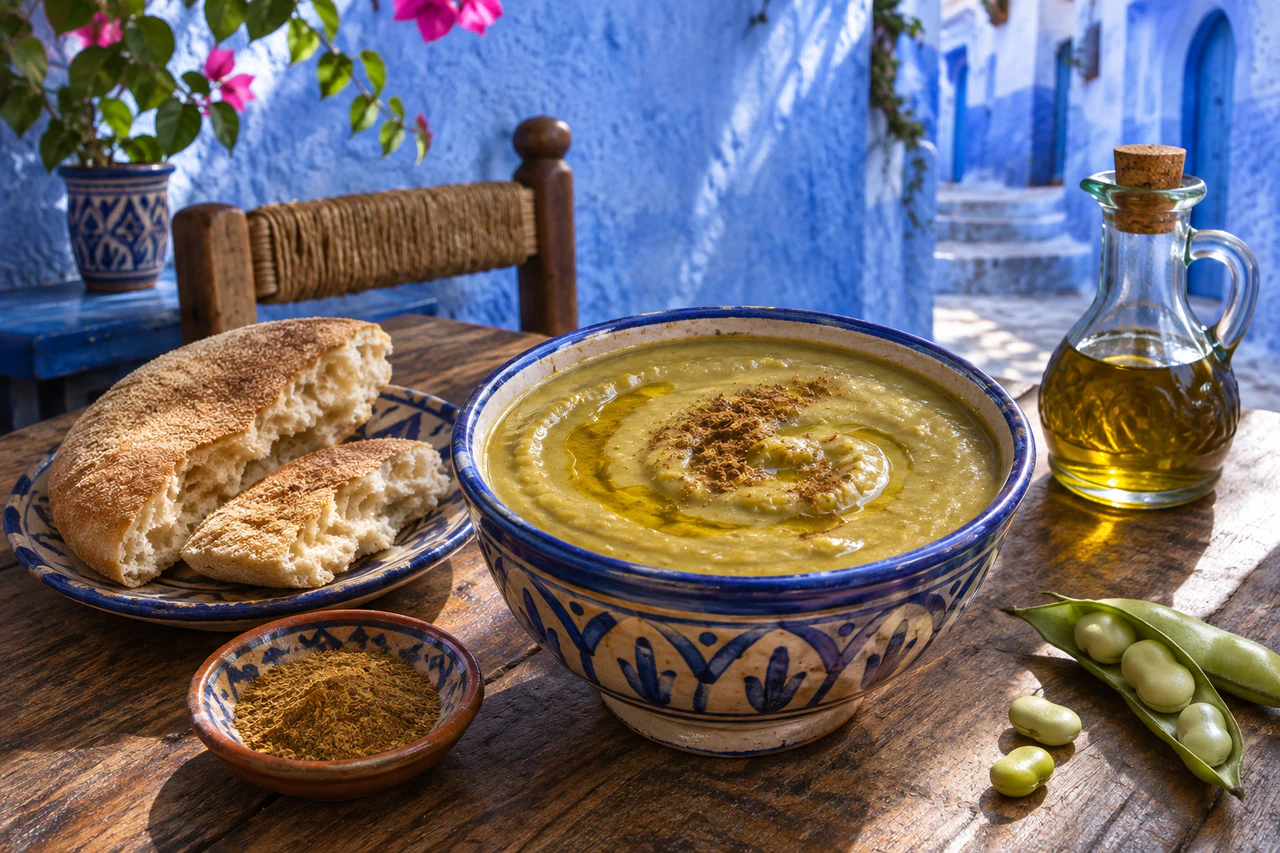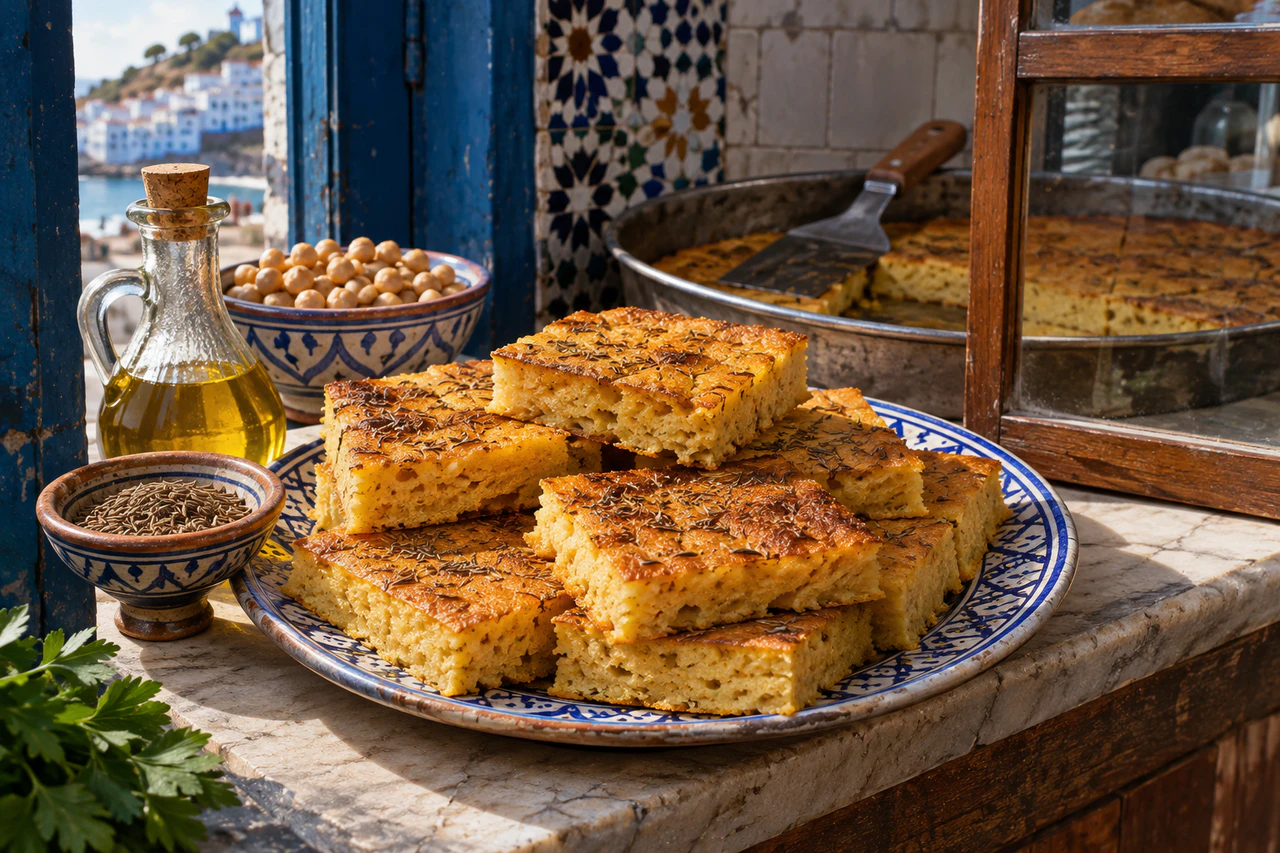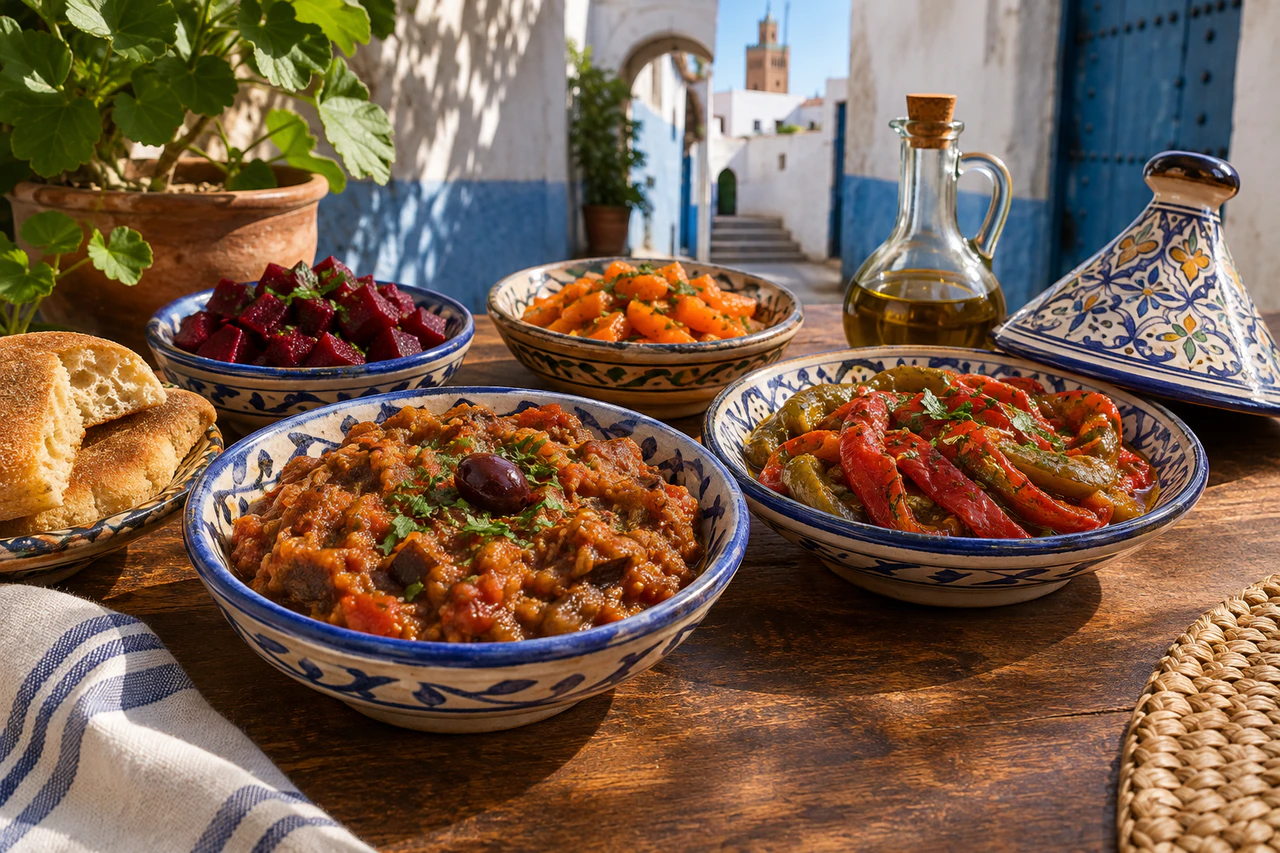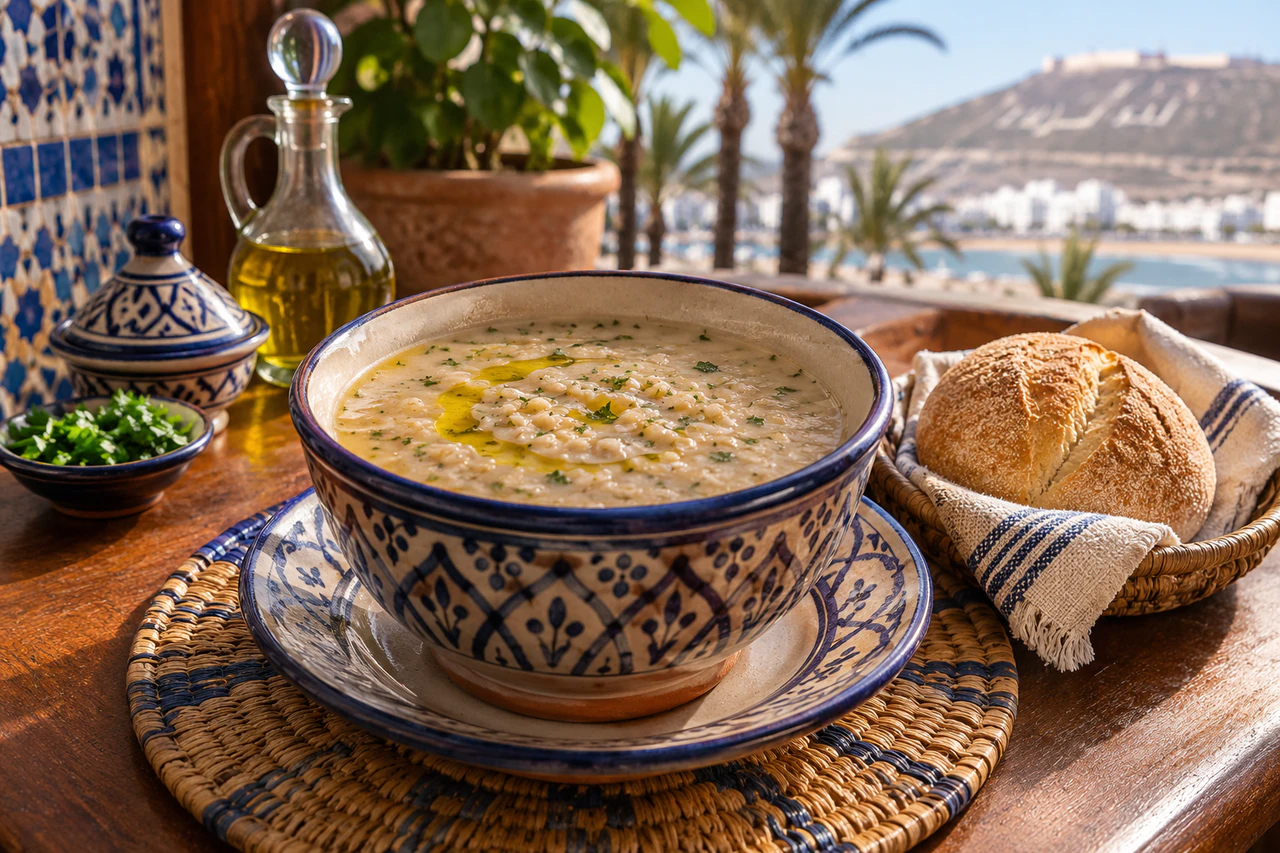
Bowl of barley hsoua with olive oil, Moroccan bread and a glass of tea. AI-generated image.
Breakfast in Agadir: barley hsoua, bread and tea
Where to have hsoua for breakfast in Agadir, how much this barley soup costs and how to pair it with breads and produce from the Souss.
With the first spoonful, hsoua tastes of cooked grain and of whatever is poured over it at the end. A thread of olive oil makes its way across the surface. The bread waits alongside and the tea may come with the rest of breakfast or once you have finished the bowl. The scene explains a morning in Agadir through an everyday food. Here it is worth looking at breakfast separately from the dishes that take centre stage on lunch menus.
Barley and the taste of a breakfast soup
L’Anice, at Studiotel Afoud, describes the hsoua on its menu as barley soup served with olive oil. The cooked grain gives body and the oil adds aroma and richness. The exact version matters because grain soups can be thicker or thinner depending on the kitchen. Start by tasting it as it arrives and ask whether the oil is served on the side. If you want a light breakfast, the bowl lets you try it without committing to a whole spread. L’Anice menu
On a table with several breads, hsoua makes sense through contrast. The crumb soaks up the liquid and a layered bread adds fat and crunch. With a little amlou or honey a sweet note appears that makes the next spoonful of soup more delicate. The same grain, usually hidden when people only talk about breads, here sets the flavour and texture of the whole breakfast. The Souss tradition shows as much in those accompaniments as in the way they are combined.
Prices and size of each breakfast
L’Anice lists the soup on its own at 15 MAD. Its Presto 2 and Berbère sets are advertised at 50 MAD and 75 MAD respectively. The 50–75 MAD range covers two full breakfasts published by the same place. The amounts are approximate and may change. Look at which drinks and breads each set includes and ask whether there is soup left before choosing. The version with more extras suits a table that wants to compare textures and has time to eat calmly. L’Anice menu
One way to order is to choose a bowl for each person and then decide what to share. If you are offered olive oil and a sweet spread, try both on bread in small amounts. It is easier to recognise the flavours that way than by spreading everything at once. Anyone avoiding gluten should remember that barley contains it. If you are allergic to nuts, also ask about what is in the amlou and about shared surfaces.
Looking for the ingredients at Souk El Had
In Amsernat, Souk El Had lets you follow breakfast from the dried grains to the oils. The local tourist office lists its weekly closing day as Monday. If you go in the morning, use the visit to see how the grain is sold, what forms the oil comes in and whether there is bread on display. Asking how a grain is cooked locally is a concrete way to learn, especially if you can describe the soup you’ve just tried. Agadir tourist office
If you are taking oil home, ask about the bottle size, origin and storage. With breakfast products it is easy to compare things that look the same colour but have different uses. Before buying a spread, ask whether it combines oil, nuts and honey, because the recipe changes between sellers. You can go back to the bowl the next day and notice how a stronger oil changes a mild soup without adding other seasonings.
The glass of tea and when to leave
Green tea with mint goes with Moroccan hospitality. If you want to appreciate the barley, taste the soup before the first sweet sip. Then decide whether the tea will go with the breads or round off breakfast. At a shared table, pass the bread basket and use the serving spoons provided for the spreads. If a hot drink is included in the set, ask about the options and the sugar before the pot is made. Moroccan National Tourist Office
Confirm breakfast hours if you are crossing the city to try hsoua. Seeing the dish on a morning menu is a guide, but availability depends on the service. An early breakfast and a walk around the market are two ways to get to know the same ingredient. The reverse order works too if you first want to see how barley is sold and then check how it changes with slow cooking.
How to try two breads without over-ordering
For two people, a breakfast with several breads can be enough alongside two bowls if the café is happy to serve that combination. Break off a piece of each bread before serving the sweet spread. Try the one that seems more delicate on its own first. Keep a piece of the sturdier one for dipping in the hsoua when there is less liquid left. That way the last bite keeps the taste of the grain and the oil, even after trying honey or a sip of tea.
Tips for British visitors
- Flights from the UK. TUI lists direct flights from London Gatwick and Manchester to Agadir Al Massira (AGA). Routes and schedules can change, so check your travel dates. Checked 22 November 2026. TUI
- Breakfast during Ramadan. Ask your hotel what breakfast it will serve and ring ahead before going out for hsoua. Café hours can change, and eating or drinking in public during daylight hours can cause offence. FCDO Ramadan advice
- What to ask for in the UK. For the Moroccan version made with barley grits, ask for cracked barley, also called belboula or semoule d’orge. Taste of Maroc’s guide to Moroccan barley soup
- Paying for breakfast. Keep some dirhams handy and ask whether the café takes cards when you order. Card payment is accepted in some places, and you may still need cash. Lonely Planet’s Morocco travel guide