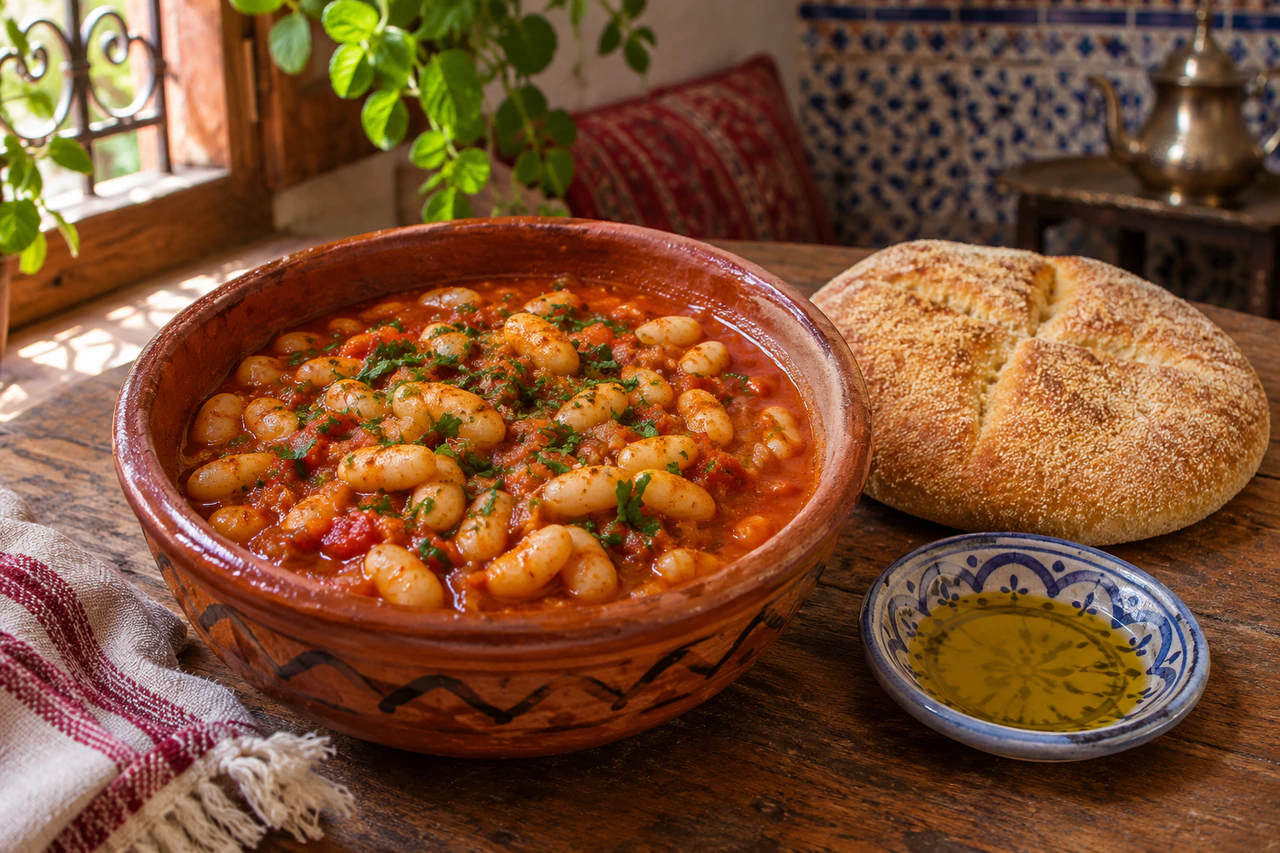
Loubia, Moroccan white beans in tomato sauce, served with khobz. AI-generated image.
Loubia: Moroccan white beans in tomato sauce
Make Moroccan loubia with dried or tinned cannellini beans, tomatoes, cumin and fresh herbs. Serve the white bean stew hot with khobz to scoop up the sauce.
Loubia is a Moroccan white bean stew with tomatoes, cumin and fresh herbs. Use tinned cannellini beans for a quick supper, or cook dried beans first and finish them in the same sauce. Serve it hot with round Moroccan bread, or khobz, for scooping up the beans and sauce.
Ingredients
Serves 2 with bread. Adapted from Alia Al Kasimi’s Moroccan white bean recipe. Both methods use the same amount of cooked beans.
- 240 g cooked cannellini beans, drained and rinsed, from a tin or cooked from dried
- A drizzle of olive oil
- 1 onion, finely chopped
- 1 tomato, peeled and diced
- 15 ml chopped fresh coriander
- 15 ml chopped fresh parsley
- 7.5 ml tomato purée
- 5 ml crushed garlic
- 1 large pinch ground turmeric
- 2.5 ml ground cumin
- Up to 2.5 ml fine salt, to taste
- 1.25 ml ground black pepper, or to taste
- 240 ml water for the sauce, plus fresh water for cooking if using dried beans
- Round khobz or crusty bread, to serve
Method
- Prepare the beans. For tinned beans, drain and rinse them. For dried cannellini beans, soak them overnight, drain and rinse, then cook them in fresh water according to the packet instructions, starting with the specified rapid boil. Once the beans are tender enough to crush easily, drain them and weigh out 240 g for the stew. Alia’s dried-bean method · Example UK packet instructions
- Start the sauce. Warm a drizzle of olive oil in a saucepan over a medium heat. Stir in the onion and cook for 2 minutes, then add the diced tomato and cook for another 2 minutes, stirring. The tomato should start to soften and release its juices.
- Season and simmer. Stir in the coriander, parsley, tomato purée, garlic, turmeric, cumin, pepper, some of the salt and 240 ml water. Add the drained beans, cover and simmer for about 20 minutes. Stir occasionally and check that the pan still has enough liquid. The beans should be hot and tender, with enough sauce left to scoop up with bread.
- Taste and serve. Adjust the salt and spoon the loubia into bowls. Serve hot with pieces of khobz to scoop up the beans and sauce, as is customary in Morocco. A spoon works well too. Moroccan serving customs · Basic Moroccan khobz recipe
For cooks in the UK
- Choose plain cannellini beans. Look for tins packed in water and check the drained weight. Sainsbury’s lists Napolina cannellini beans at 240 g drained and also lists dried cannellini beans. Listings checked 22 November 2026. If you can’t get khobz, serve the stew with crusty bread. Taste of Maroc on serving loubia
- Make it ahead. Cool the stew in small portions and refrigerate within one to two hours. Eat it within 48 hours or freeze the cooled portions promptly if you plan to keep them longer. Defrost in the fridge, use within 24 hours of fully defrosting and reheat only once, until steaming hot throughout. Food Standards Agency on chilling, freezing and defrosting · Food Standards Agency on reheating
Frequently asked questions
Can I make loubia with tinned white beans?
Yes. Drain and rinse plain tinned cannellini beans, then add them to the tomato sauce and simmer as directed. This is the main method in Alia’s loubia recipe.
Do I need to soak dried cannellini beans?
Yes, for this method. Soak them overnight, drain and rinse them, then follow the packet’s boiling and simmering instructions. Cook the beans until tender before adding them to the tomato sauce. Alia’s recipe notes · Example UK packet instructions
Is Moroccan loubia always meat-free?
This version is meat-free and uses water for the sauce. In Morocco, loubia can also be made with meat, so ask what went into the pot if you’re ordering it out. Taste of Maroc
Is loubia a main dish or a side?
It can be either. Serve a bowl with khobz for supper, or put a smaller portion on the table alongside other dishes. In Morocco, people often scoop up the beans and sauce with bread. Moroccan serving customs
How do I reheat loubia if the sauce has thickened?
Reheat it gently on the hob with a splash of water to loosen the sauce. Stir as it heats and make sure it’s steaming hot throughout. Reheat each portion only once. Taste of Maroc on reheating loubia · Food Standards Agency on leftovers
Sources: Cooking With Alia’s Moroccan loubia; Taste of Maroc on loubia; Taste of Maroc on khobz; Marokkanisch on loubia and serving customs; Food Standards Agency on chilling and freezing; Food Standards Agency on cooking and reheating.