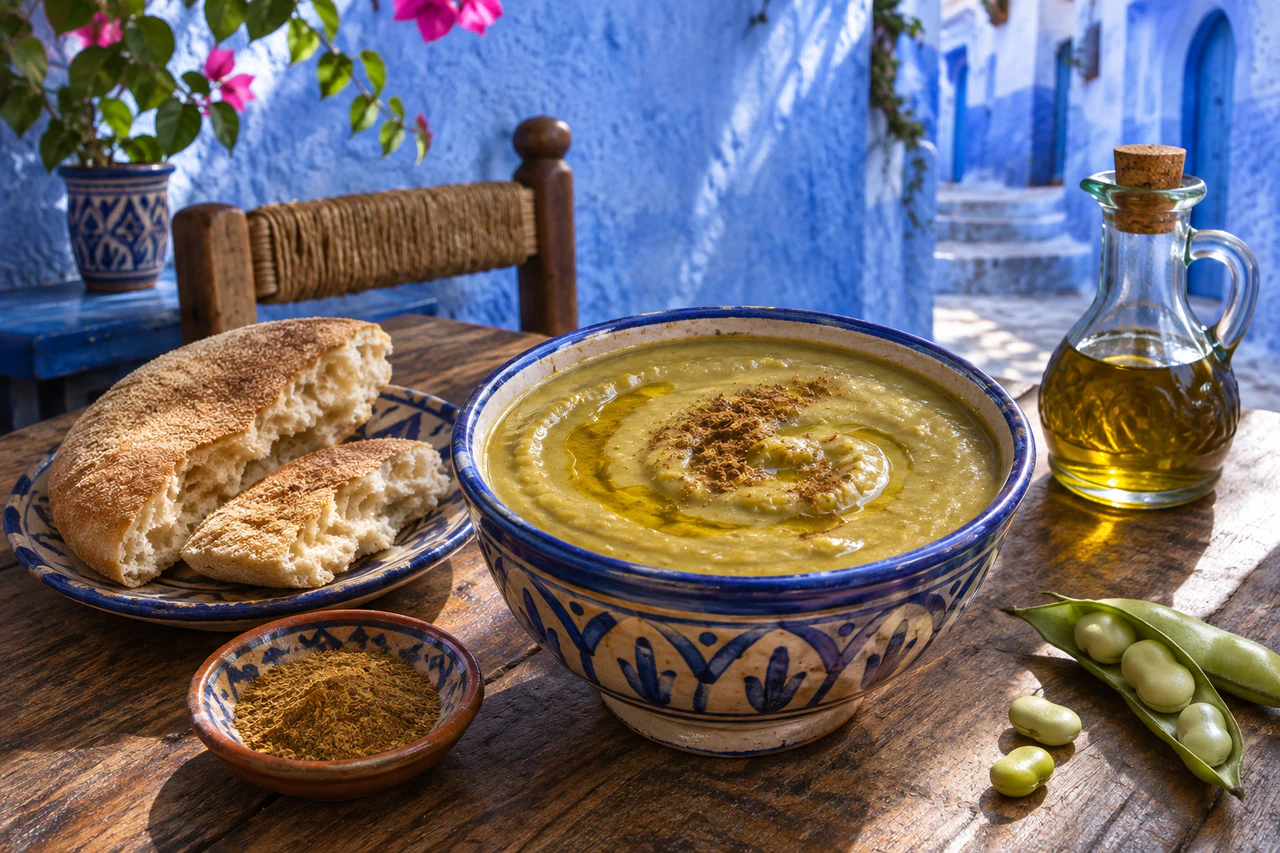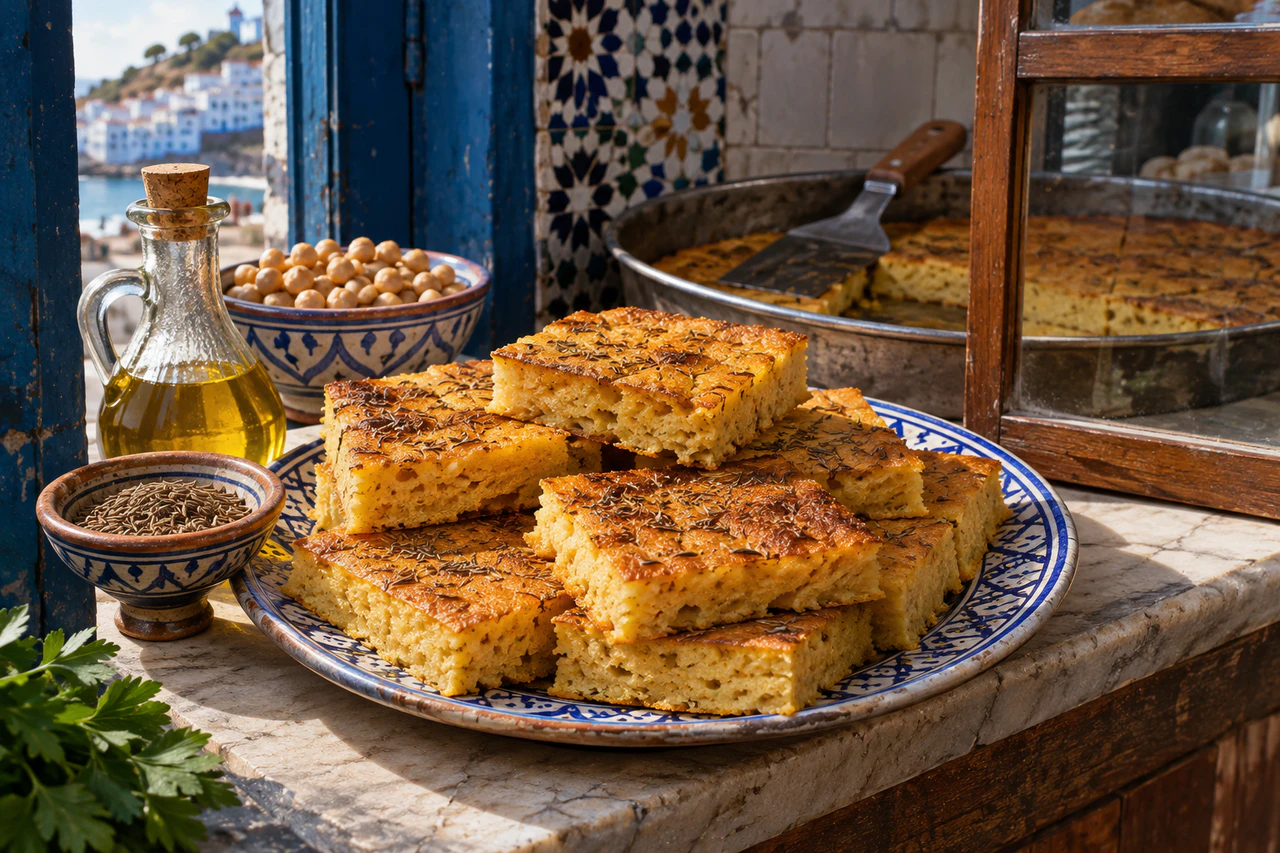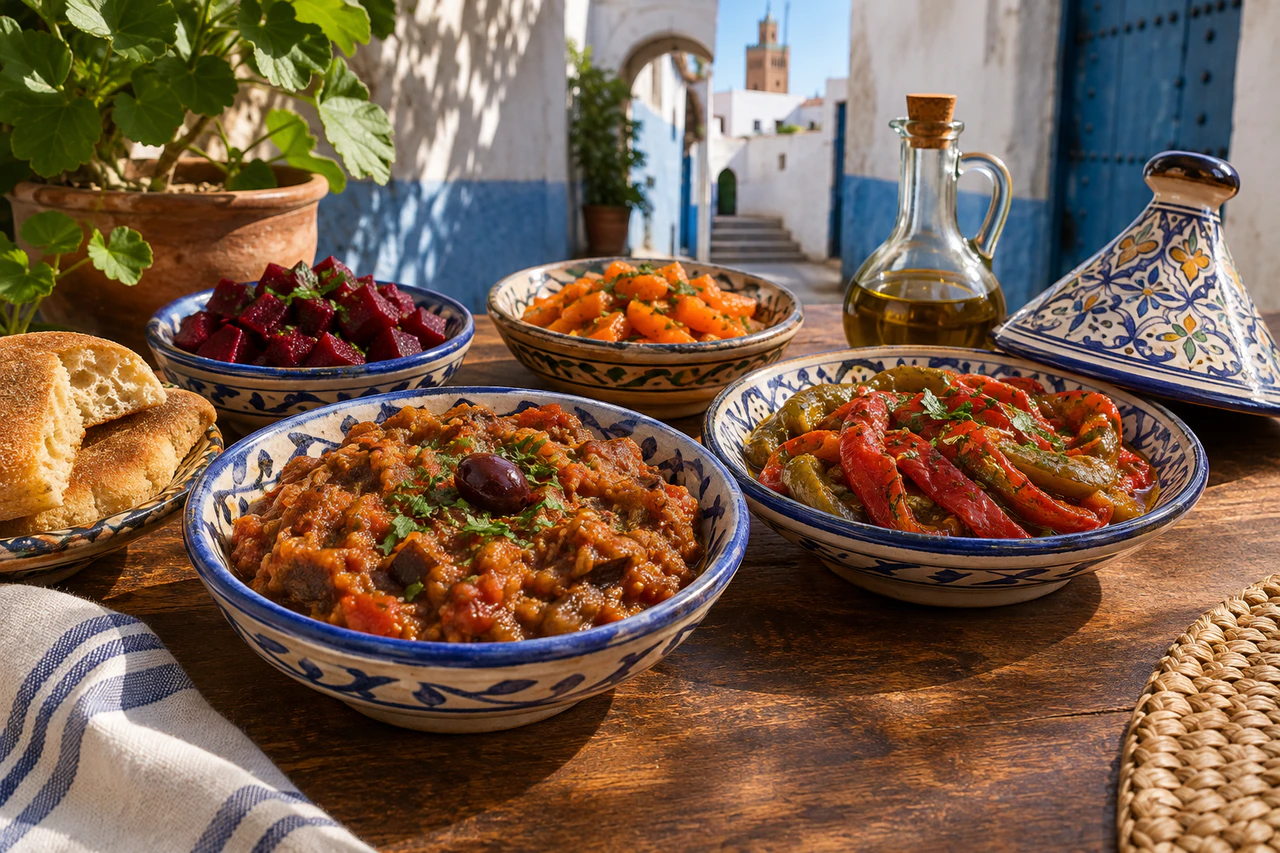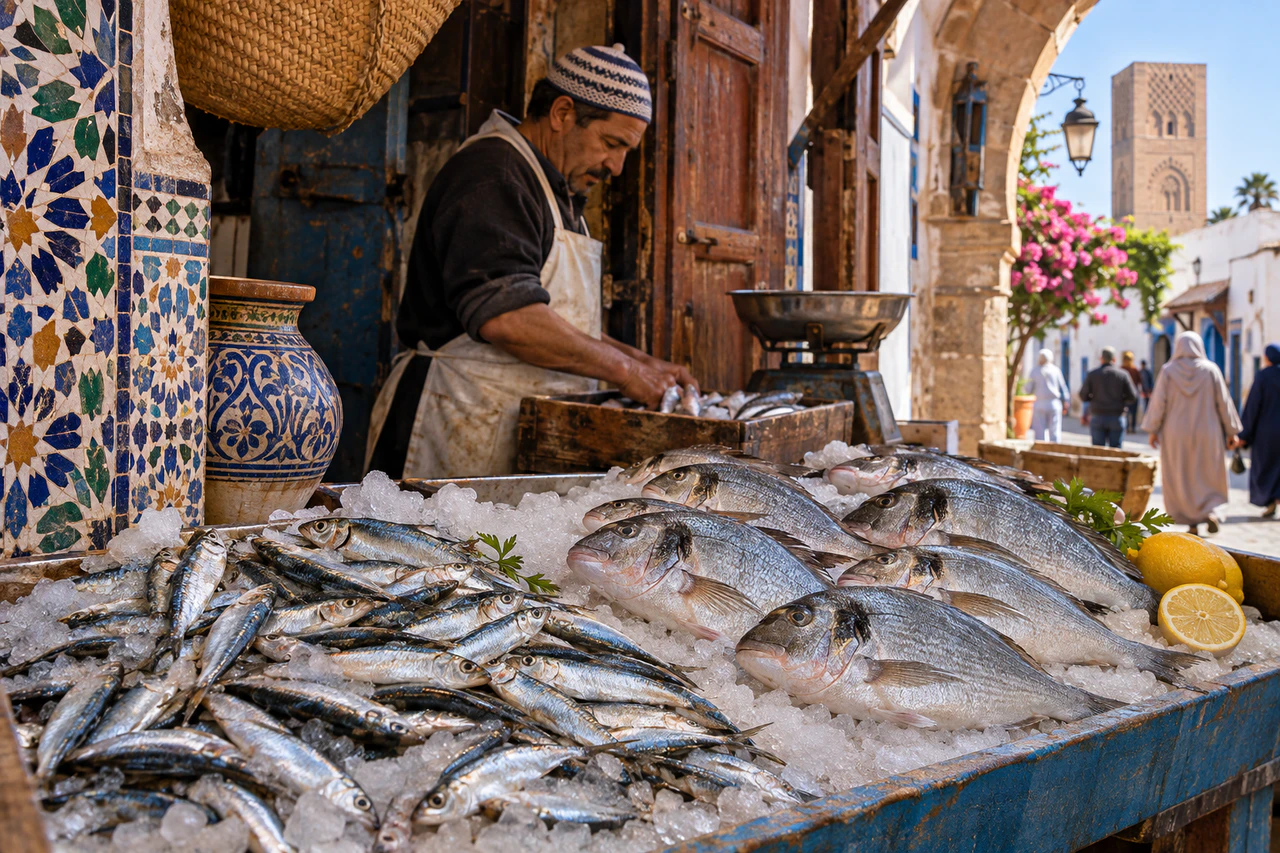
Counter with fresh produce at Rabat’s Central Market. AI-generated image.
Rabat Central Market: from fish and vegetables to the medina
How to walk Rabat’s Central Market from Bab El Had and budget a market meal with published prices.
The market announces itself with the movement of shopping bags and the shine of the counters. Beside Rue Souiqa, a walk through Rabat changes pace and the questions become specific. What fish came in today? Are the vegetables sold by the kilo or by the piece? If you are eating in the medina afterwards, these questions help you read the menu and choose a seasonal dish.
A shopping entrance to the medina
Rabat’s heritage file places the Central Market on the route through Bab El Had and Rue Souiqa. The city’s UNESCO inscription brings together the medina and its 20th-century extensions. The market lets you see that continuity on foot and combine fresh produce with a stop at a medina table. Rabat heritage route · Rabat, World Heritage
Along the way, it is worth stopping to see how vegetables and fish are sold. Some items are easier to compare by the piece than by their look. If the counter is quiet, ask what the seller’s recommended dish is used for. You can ask whether that piece is grilled or stewed.
If you buy some to take away, check the net weight and the unit of sale. Confirm the total once it has been weighed. For a first try, a portion of something you can eat or keep for a short time is usually enough. Ask whether it needs refrigerating.
How much to set aside for a sit-down meal
As a restaurant reference, Dinarjat lists chicken tagine with lemon at 130 MAD and chicken couscous at 150 MAD. The 130–150 MAD range is approximate and may change. It refers to those dishes on a sit-down menu. At the market, confirm the price per piece or per kilo and any extra service before agreeing to buy. Dinarjat menu
Before sitting down, ask whether the restaurant has a market dish that day. Some dishes are only announced by word of mouth. If you are travelling with someone who needs to know the ingredients, mention any seafood allergy when ordering and let the staff check with the kitchen. Ask about oils, stocks and shared surfaces.
If you are sharing, make clear whether it is charged by the piece or by the portion. Ask for the total when the piece is large. That way you can add vegetables or a salad with your dish and leave time to eat calmly. Save the tea for afterwards.
The stretch from Bab El Had
From Bab El Had, follow Rue Souiqa towards the Central Market. The documented route carries on towards Souk Sebbat and Rue des Consuls. You can stop earlier if you are only interested in food and walk the rest later. Check which counters are open if you want to reach a particular one. Rabat heritage route
Start at Bab El Had. Find the entrance street before going in among the stalls. Leave the stretch towards Souk Sebbat for the second part, once you have an idea of what you want to try. After the market, decide whether you want to continue to Rue des Consuls.
To plan your way back, find the most practical exit for lunch. On foot, check the restaurant’s address before leaving the main street. If you have a booking later, ask how long the dish of the day takes and allow time for serving too. A quick question helps if time is tight.
How to take a break near the market
If you sit down to eat, ask whether bread is included. Mint tea gives you a break once your shopping is put away and you have tasted the dish. If you are only having something quick, ask about the price and size before sitting down. Drinks of Morocco
If you are served a dish with vegetable sides, wait for the glasses to be handed out and see how the extras are laid out. Try the simplest part first. Offer the bread before mopping up sauce. Leave room for the teapot if you order it afterwards.
During a short break you can ask which vegetables go into the stew. You may recognise the ones you just saw at the market. With more time, try a bite without any sides on its own. It helps pin down the flavour of the main dish.
Questions that give useful answers at the counter
One way to train your palate is to compare the piece you saw at the counter with how it is served at the restaurant. Ask whether you know the exact species or variety.
The second comparison is two vegetables of different sizes. Notice which part keeps its texture after cooking. Write down the local name before carrying on with your walk. This lets you appreciate separately what you saw at the market and what you ate at the table, and makes it easier to remember what you would order if you came back.
The street name helps you tell the shopping stop apart from the full route to the kasbah. If you only want to eat, spend one stretch on fresh produce and leave before you reach the stalls of other trades.
Tips for British visitors
- Go in the morning. Visit Rabat recommends a morning visit to Rue Souika for the market atmosphere. Browse before lunch if you want time to ask what is in season. Take some Moroccan dirhams for small purchases, as card acceptance varies. Visit Rabat · Lonely Planet
- Eating from a stall. Choose food that is cooked thoroughly in front of you and served hot on clean crockery. Avoid raw or undercooked fish and shellfish. If you are unsure about the water supply, choose bottled water with the seal intact and skip the ice. GOV.UK food and water advice
- Shopping during Ramadan. Check stall and restaurant hours before setting off, especially if you are planning lunch after the market. Avoid eating or drinking in public during daylight. GOV.UK Morocco travel advice
WORDING FIXES
| Exact phrase | Suggested wording |
|---|---|
| “from fish and vegetables to the medina” | “a food walk from Bab El Had” |
| “The market announces itself with the movement of shopping bags and the shine of the counters.” | “Shoppers crowd around the fish and vegetable stalls.” |
| “ask what the seller’s recommended dish is used for” | “ask the seller how they would cook what you’re looking at” |
| “Some dishes are only announced by word of mouth.” | “Ask the staff about any specials that aren’t on the menu.” |
| “Ask whether you know the exact species or variety.” | “Ask the seller what the fish or vegetable is called.” |
| “spend one stretch on fresh produce” | “browse the fresh produce stalls” |
OUTDATED OR TO CHECK
- Restaurant budget. Dinarjat’s current menu differs from the figures quoted for chicken with preserved lemon and chicken couscous. Remove the range. A restaurant menu also gives no basis for estimating stall prices or preparation charges. Dinarjat menu
- Route and entrances. UNESCO documents the link from Bab El Had through the market and Souiqa to Souk Sebbat and Rue des Consuls. Check which market entrances are in use. Visit Rabat’s morning recommendation concerns the area and does not establish individual stall hours. UNESCO heritage route · Visit Rabat
- Stall services. Current opening hours, card acceptance, bargaining practices and any cleaning or cooking services could not be verified by stall. Ask before buying if you need a particular service.