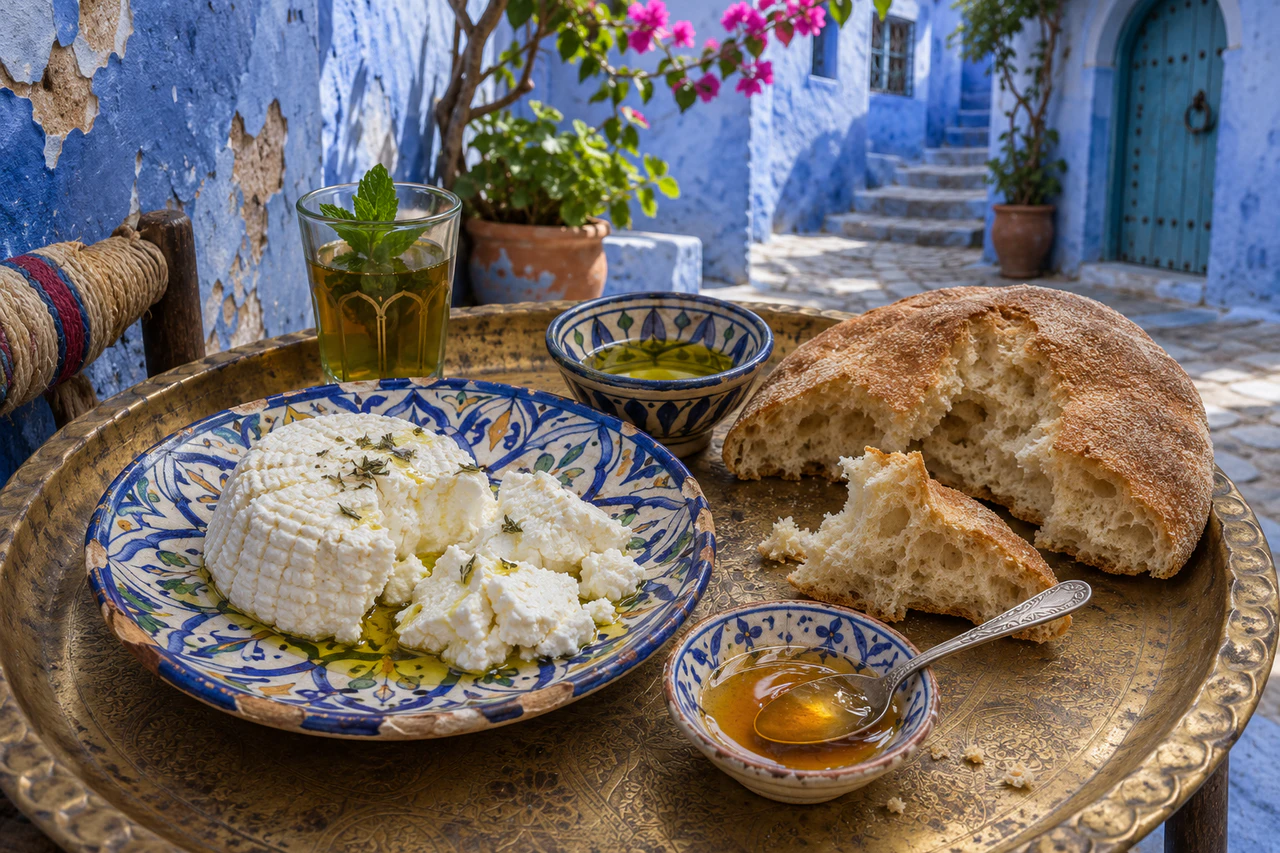
Fresh goat’s cheese with bread, olive oil and honey in a Chefchaouen courtyard. AI-generated image.
What to eat in Chefchaouen: goat’s cheese, Rif cooking and sweets
Try goat’s jben from the Rif, walk Chefchaouen’s souks and discover its tagines, sweets and teas on a route through the blue city.
Morning in Chefchaouen smells of toasted bread and mint. From the blue streets you can see the slopes of the Rif, and in the shops at the lower end of the medina you’ll find produce from the surrounding villages: fresh cheese, olive oil, honey and figs. Ask for a piece of goat’s jben and have it with bread. Its mild tang and moist texture explain why a drizzle of oil is all it needs. From that first bite, plan your day between the market, a bowl of bissara for lunch and an afternoon snack in the square.
Goat’s cheese from the Rif
How to order and taste jben
Jben is a fresh cheese, and the goat’s version is tied to the food heritage of the Jbala communities of the western Rif. It can be creamy or crumble slightly when cut. Ask whether it is goat’s cheese and which village it comes from, because the word is also used for fresh cheeses made from other milks. Get a small portion to eat as you walk. Try the cheese on its own first, then add olive oil. If you find local honey, a little honey on the bread brings out the cheese’s tang and brings out the cheese’s tang.
Where to find it in the souk and the medina
If your visit falls on a Monday or Thursday, ask your accommodation where the weekly souk sets up and confirm it is on that day. Go in the morning to find more stalls open. Look for products from nearby villages and ask who makes them. To take honey or oil home, choose a well-sealed container. For fresh cheese, buy only what you will eat soon and ask how to keep it. Check whether the price is for the piece, a portion or by weight.
If you arrive on another day, start at Outa el-Hammam square and walk down to the medina shops. Ask for jben de chèvre if French is easier for you. In a café, ask whether they can serve it with bread or with breakfast. It is also worth asking about dried figs and the oil they use in salads. A short walk through the shops helps you recognise the ingredients that will later appear at the table.
Mountain cooking: bissara, tagines and couscous
A bowl of beans or a kid goat tagine
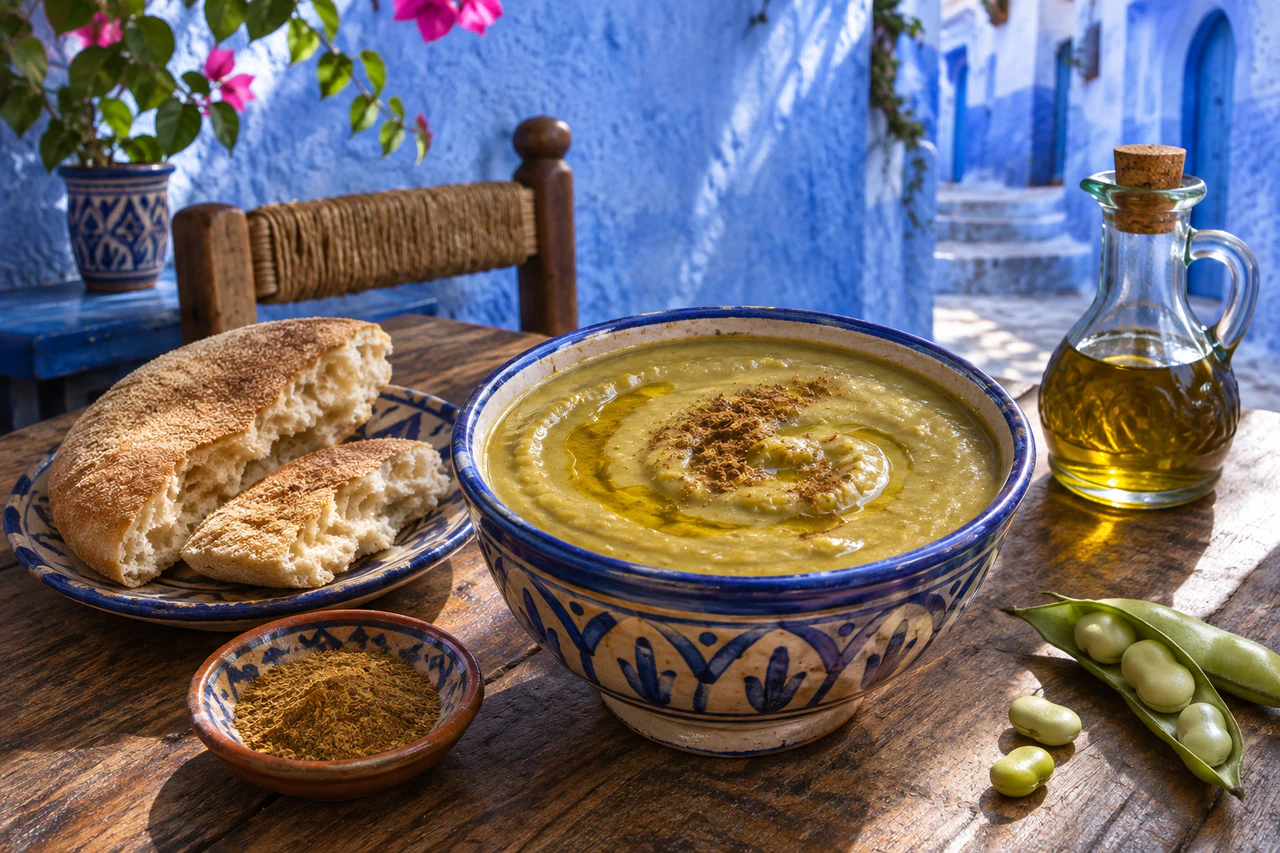
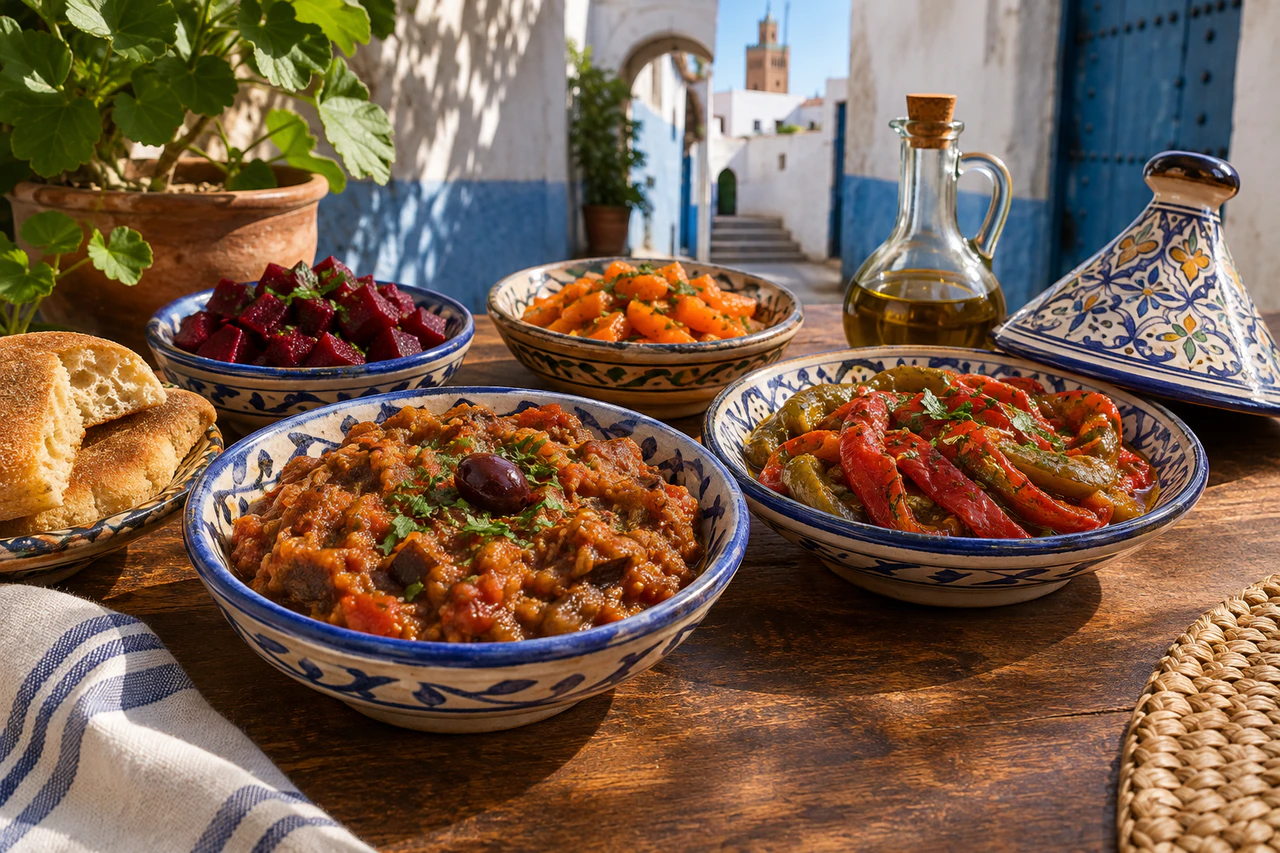
Bissara made with split broad beans has a thick texture that begs for bread. It usually comes with a drizzle of oil and you can add cumin to taste. Order it at midday if you had a late breakfast. For a longer meal, look for a kid goat tagine with onions. Slow cooking softens the meat and concentrates the juices at the bottom of the dish. If you prefer vegetables, ask what is at the market that day and whether they can make a tagine with them. Squash and leafy greens may appear as a side or in cooked salads.
The Rif table and the Friday tradition
The kitchens of the Rif bring together Amazigh traditions and farming practices of communities such as the Jbala. Bread, pulses, oil and products from herding help you read that history at the table. Chefchaouen took part as Morocco’s representative community in the Mediterranean diet file inscribed by UNESCO, which covers practices such as growing, preserving, cooking and sharing food. On Friday, ask for couscous. At Bab Ssour, near Outa el-Hammam, the menu lists Friday couscous with goat, chicken and other meats.
Sweets, tea and prices to plan your visit
From dried figs to gazelle horns
Local dried figs and honey make a simple afternoon snack. To get to know the Moroccan pastries served in Chefchaouen, ask for kaab el ghzal or gazelle horn, a crescent of thin pastry filled with almond and scented with orange blossom water. You can also ask for an almond briouat, triangular and crisp, or a ghriba, whose texture varies with the recipe. Share two pieces with green mint tea and try the one with less honey first so you can pick out the orange blossom.
As a reference, Bab Ssour lists bissara at 20 MAD, kid goat tagine at 60 MAD and gazelle horn at 7 MAD. Check prices and availability on site. If you are only having one sit-down meal, order the stew that is ready that day and save the tea for a terrace on Outa el-Hammam. There you can decide whether you want a glass or a pot to share. If you prefer your tea less sweet, ask before it is made. With an almond sweet, the scents of mint and orange blossom are easier to tell apart.
Tips for British visitors
- Getting there from the UK. Tétouan (TTU) is the nearest airport. The published timetable lists direct Royal Air Maroc flights from London Gatwick (LGW). Ryanair also lists direct flights to Tangier (TNG) from London Stansted and Manchester. Routes checked on 22 November 2026. Schedules can change, so confirm your dates with the airline. Nearest airports · Gatwick–Tétouan timetable · Ryanair
- At the souk. Carry Moroccan dirhams in small denominations for stalls. Compare offers before buying and ask the seller what the quoted amount covers. Lonely Planet’s guide to Moroccan souks
- Buying fresh jben. Ask whether the cheese was made with pasteurised milk. UKHSA advises travellers to avoid unpasteurised dairy products. UKHSA on GOV.UK
- Taking food home. If you’re returning to Great Britain, eat the cheese in Morocco and check the personal import rules before packing honey. Dairy from Morocco is prohibited and honey is subject to a limit. GOV.UK food import rules