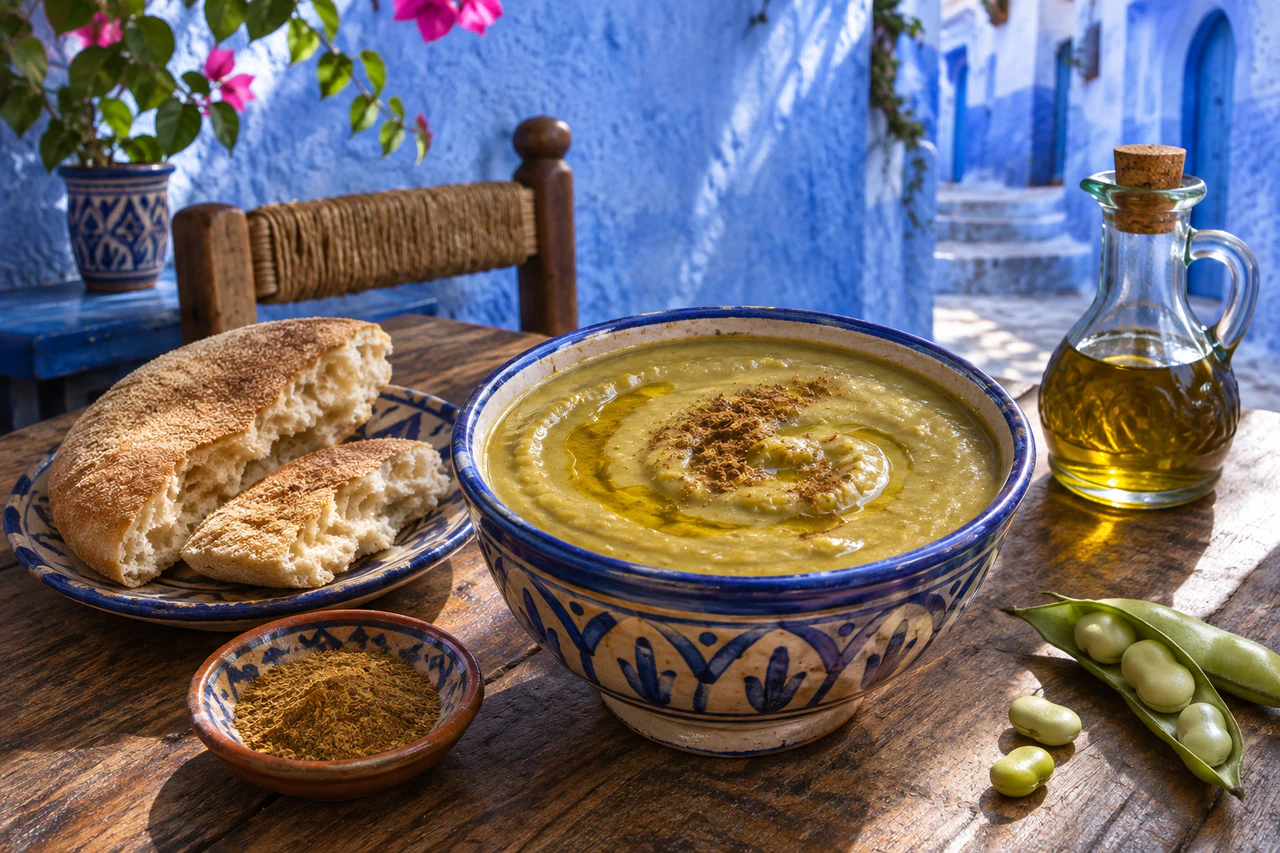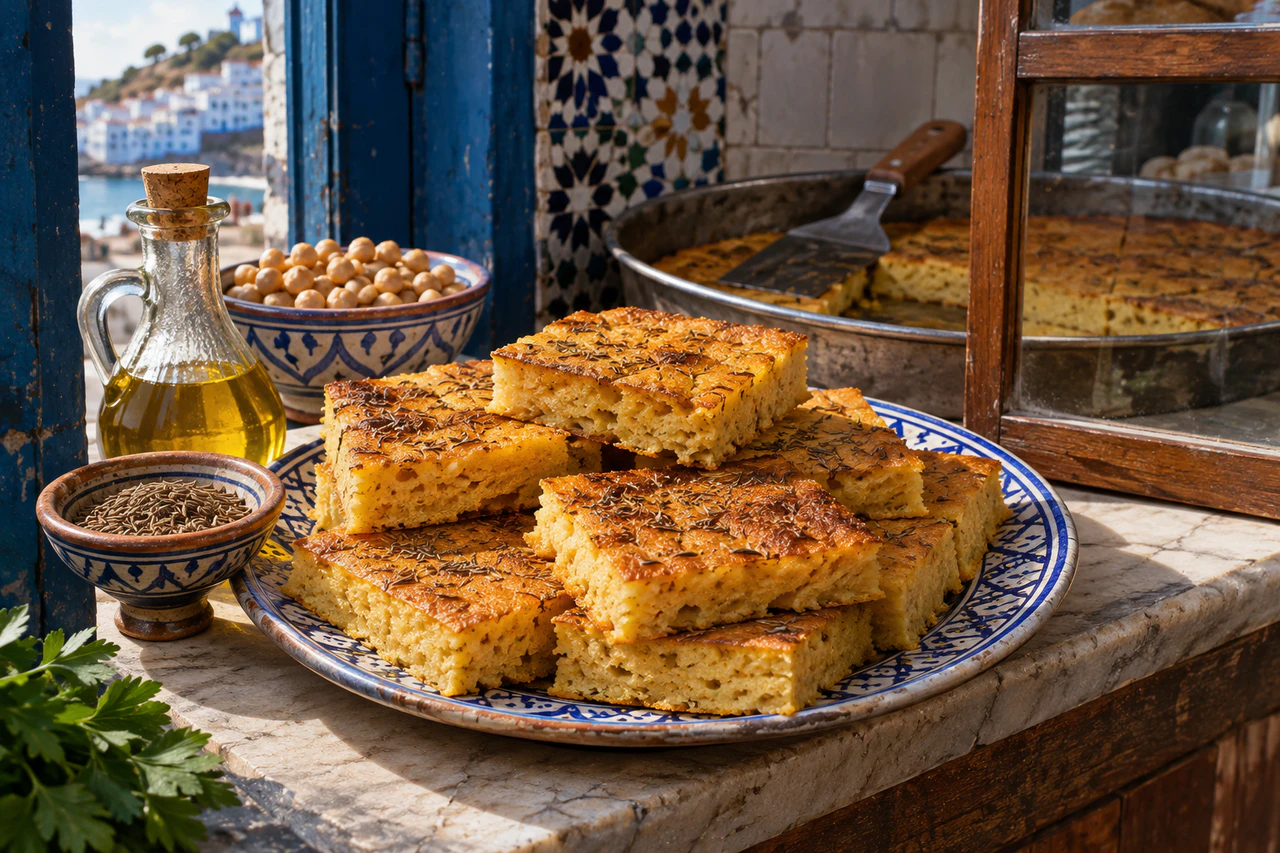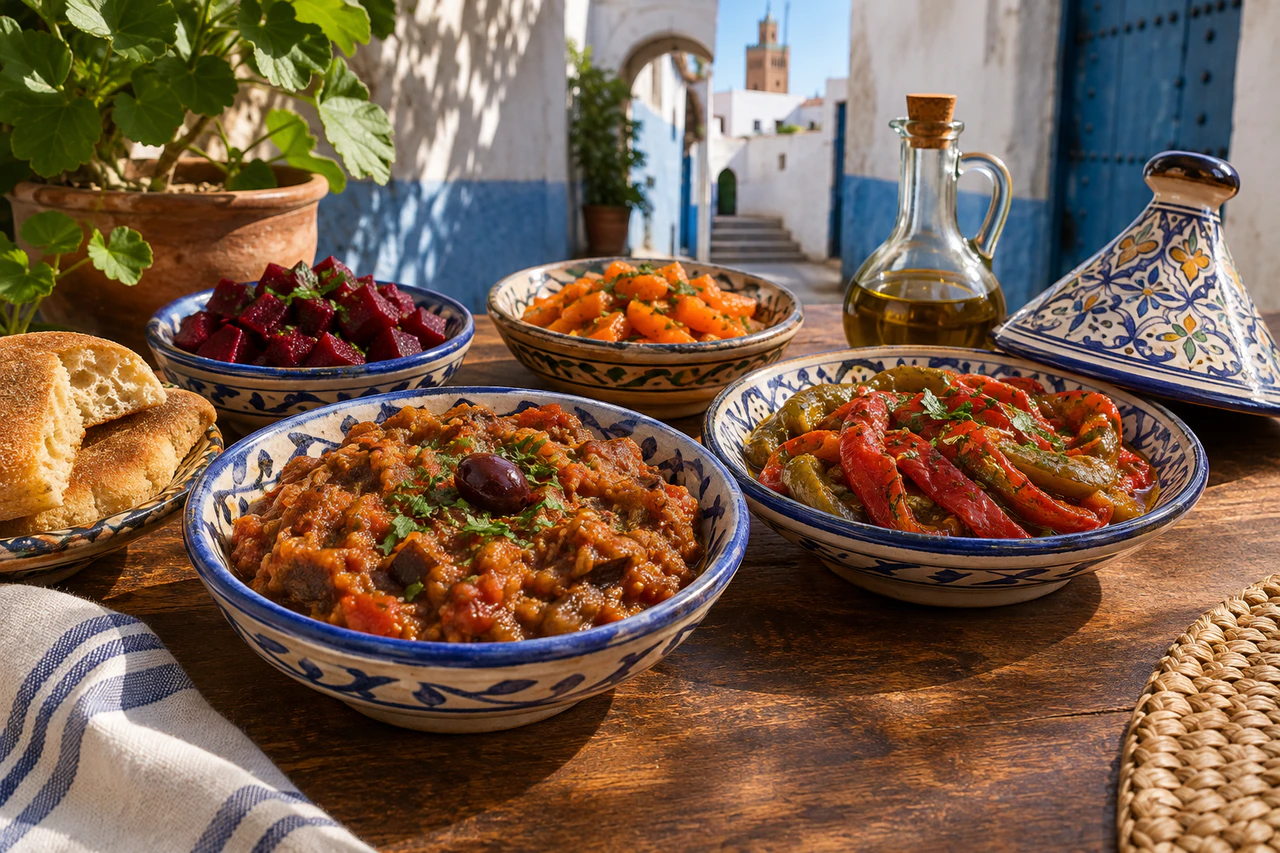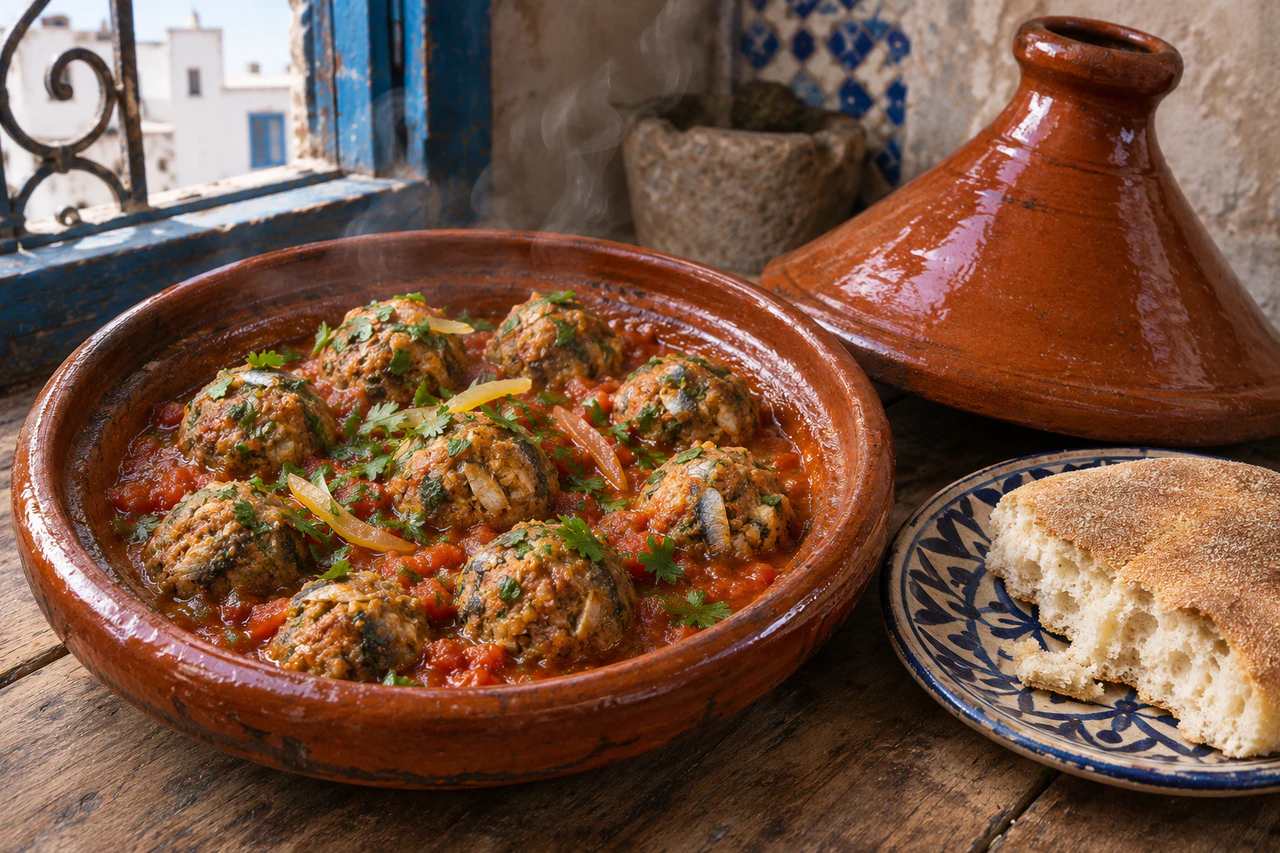
Sardine meatball tagine in tomato sauce, with herbs, lemon and bread. AI-generated image.
What to eat in Essaouira: the sardine tagine of old Mogador
Discover Essaouira’s food with its sardine meatball tagine, the fish souk, the harbour grills and prices in MAD.
When the lid comes off the tagine, the steam smells first of tomato, then of cumin and coriander. Underneath are bite-sized sardine meatballs, nestled in a thick sauce. A piece of bread is enough to scoop up what is left at the bottom. The same sardine is served whole at the harbour grills, with toasted skin and flesh that is still juicy. Trying both gives you a good measure of Essaouira’s cooking and of what changes when fish moves from the coals to the pot. Visit Essaouira, local food.
The cooking of a city that grew around its harbour
In the 18th century, Sultan Sidi Mohammed ben Abdallah drove the development of today’s Essaouira, then known as Mogador, to expand Morocco’s sea trade. The fortifications and the layout of the medina reflect that project. The main streets linking the harbour and the city gates crossed at Souk Jdid, where trade in fish, spices, grain and other foods was organised. The heritage file helps place the markets within the city’s history. UNESCO, Medina of Essaouira and nomination file.
Local cooking keeps several ways of handling the catch. Visit Essaouira describes the harbour grills, fried fish and tagines, including the sardine meatball one. In that stew, the fish shares the spotlight with tomato, herbs and preserved lemon. On the grill, the sardine’s natural oil and the crisp skin are what you notice first. Visit Essaouira, local food and L’Atelier Essaouira recipe.
The link with trade can also be seen in buildings that changed use. La Table by Madada occupies a former carob warehouse where, according to the restaurant, goods for export to Europe were gathered. Today its menu centres on fish. The example helps place Mogador’s sea trade alongside the way kitchens work today with what comes from the sea. History of La Table by Madada.
What to order to try sardines two ways
Sardine meatball tagine · 60–100 MAD
In the recipe published by the local cooking school L’Atelier, the sardine flesh is boned, chopped and mixed with garlic, parsley, coriander and spices such as cumin and paprika. The meatballs finish cooking covered in a tomato sauce. Preserved lemon peel perfumes the whole dish. Look for a tender texture, with sauce thick enough to cling to bread. L’Atelier Essaouira recipe.
To order it by name on a French menu, look for tajine de boulettes de sardines. Dar Aicha, on Rue Mohamed Diouri in the medina, lists it at 60 MAD. Le Chalet de la Plage, on Boulevard Mohammed V, advertises it at 100 MAD. If you are going specially for the tagine, check that it is among the dishes available that day. Dar Aicha menu and Le Chalet de la Plage menu.
Grilled sardines · 70–80 MAD on the menus consulted
At the grills near the harbour you can ask for whole sardines. Ask for them freshly grilled and try the toasted skin first. If lemon comes on the side, squeeze it over the first sardine just before eating it. Riad Al Madina lists its grilled sardines at 70 MAD at lunch. Le Chalet de la Plage advertises grilled or stuffed sardines at 80 MAD. At the harbour stalls, ask directly about the price and what the portion includes. Visit Essaouira, the harbour, Riad Al Madina menu and Le Chalet de la Plage menu.
How to find the fish souk and plan lunch
Souk Jdid and the grills at the harbour entrance
Look for Souk Jdid inside the medina, at the historic crossing of the street from Bab Doukkala to the harbour and the one that runs down from Bab Marrakech to the sea. In the souk, find the fish market and the spice shops. Asking the seller which fish they recommend for grilling or stewing helps you find your way among the fish on display. To see the harbour grills, carry on towards Place Moulay El Hassan and the seafront. Keep clear of the paths workers use with their crates. If you want to photograph a seller or their stall up close, ask permission first. UNESCO file, medina map and Visit Essaouira, the harbour.
If you’re in Essaouira for only one lunch, start by walking through the market and decide based on what you want to try. For a whole fish, ask whether the price is per piece or by weight. When you are offered something cooked separately, confirm the total and whether it includes bread, salad and cooking. The figures in this article are approximate prices from online menus checked on 13 November 2026 and may change. To plan your spending, use the range for the dish you choose and add drinks and sides from the day’s menu.
Tea and the customs of a shared table
Green mint tea, served in small glasses, is a common gesture of welcome in Morocco. In Essaouira you can ask for a glass after lunch or a pot to share during a break in the medina. If you prefer it less sweet, say so before it is made. At a shared table, wait to be shown how to serve yourself. If the tagine goes in the middle, ask whether individual plates will come and break the bread into pieces to scoop up the sauce. Moroccan National Tourist Office, the tea ceremony.
Tips for British visitors
- Getting there from the UK. Ryanair lists direct flights from London Stansted (STN) to Essaouira Mogador (ESU). The route was checked on 22 November 2026. Routes and schedules can change, so check your dates before booking. Ryanair
- When to go. If you want to combine a food trip with live music, the Gnaoua and World Music Festival is scheduled for 24–26 June 2027. Check the organiser’s programme before planning your visit. Official festival website
- Paying at the market. Carry Moroccan dirhams for fish stalls. Cards are widely accepted in tourist areas, but cash is useful in the markets. If a stallholder is open to bargaining, keep it friendly and agree the total before the fish goes on the grill. Lonely Planet
- Making the tagine back home. Tesco lists Belazu Beldi preserved lemons online. Check availability for your postcode. Product listing checked on 22 November 2026. Tesco