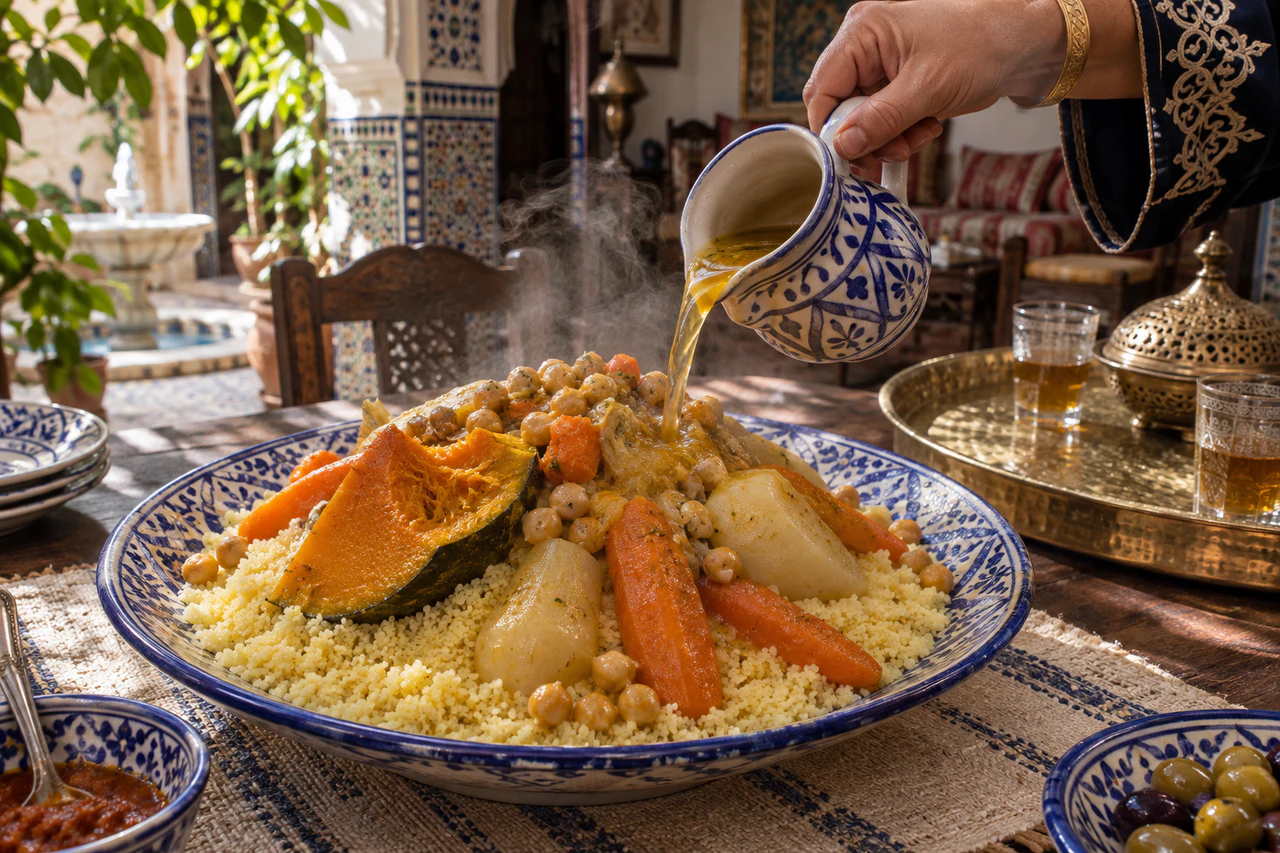
A hand pours broth over a platter of couscous with squash, carrot and chickpeas. AI-generated image.
What to eat in Fez: spice souks, Friday couscous and pastilla
Walk the souks of Fez and find out where to try Friday couscous, almond pastilla and other specialities of the medina.
Go in through Bab Boujloud and walk down Talaa Kebira. As the street narrows, the smell of bread mixes with the cumin from the shops and the steam from the eateries. At a nearby table someone is having eggs with cured meat for breakfast. Further in, someone is buying squash and turnips for couscous. Fez el-Bali, the heart of a city founded in the 9th century, is best explored by following the food stalls and shops. Start with a simple breakfast, cross the market and save pastilla for a sit-down meal.
Where to buy spices and have breakfast in the medina
From Talaa Kebira to the shops of Attarine
Talaa Kebira helps you get your bearings from the blue gate before heading into the alleys. Look for the spice shops of Attarine, around the Qarawiyyin university and mosque. Go up to a stall and ask what they would use for a pastilla. The cinnamon that scents the sugar on top plays a different role from the saffron in the filling. If you want to cook when you get home, buy small amounts and write down the name of each blend. With ras el hanout it is worth asking what is in it, because the mix changes from seller to seller.
R’cif market and eggs with khlii
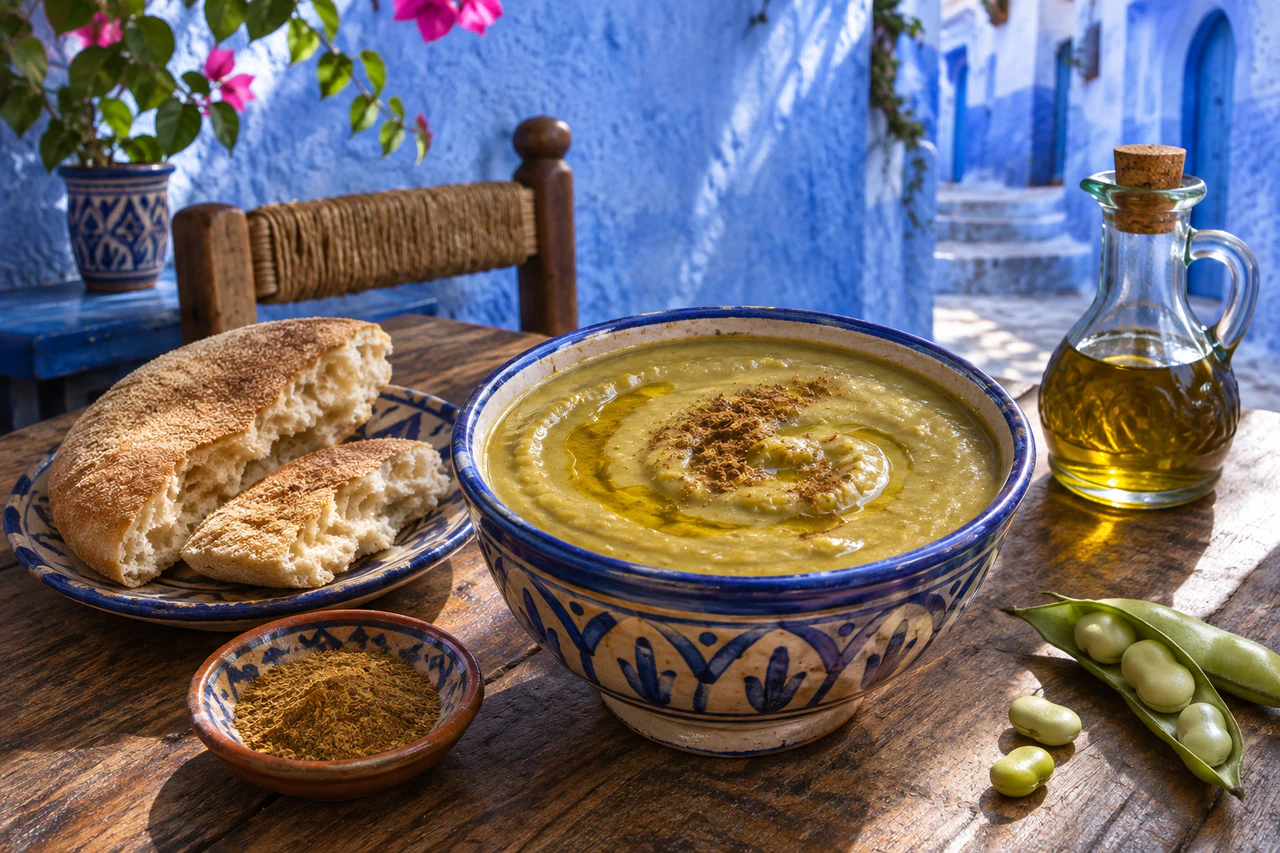
Carry on to R’cif market to see the produce that fills the medina’s pots. Seasonal vegetables give clues about what may arrive in the couscous. For breakfast, look for eggs with khlii. This Fez speciality is made with salted, dried meat that is cooked and stored in fat. Heated with egg, a few strips are enough to flavour the dish. Mop up the yolk with bread. If you prefer something lighter, look for bissara made with split broad beans, olive oil and cumin.
At the stalls, first watch how people order. At some stalls you eat standing up. Others have seats. If you are buying olives or nuts for the road, say how much you want before they fill the bag. In the narrowest alleys, step aside to talk to the seller. That way you can ask about where an ingredient comes from or how it is used at home without blocking the way.
The Friday couscous ritual
How to recognise well-steamed couscous
In many Moroccan families, Friday lunch is built around couscous. The semolina is worked by hand and steamed in the top of a couscoussier while the broth cooks below. The grains should be tender and separate. On the platter, the mound holds the vegetables and meat, and the broth is added when served. UNESCO inscribed the knowledge and practices of couscous in a nomination shared by Morocco, Algeria, Mauritania and Tunisia. In Fez, sitting down to eat it on a Friday shows you one of the ways that custom lives on.
Seven-vegetable couscous may include carrot, turnip, squash and other seasonal vegetables. Ask for some broth on the side if you want to add it gradually and keep the texture of the semolina. If you like a sweet contrast, look for a version with tfaya, onion cooked slowly with raisins and spices. For a vegetarian dish, ask about the broth too. If your trip falls on a Friday, book for lunch and confirm the serving time. Some restaurants offer couscous on other days but make a special version for that midday meal.
Fez pastilla and after-meal tea
A festive dish of poultry and almonds
In Fez pastilla, the thin sheets of warqa crackle before the filling appears. The poultry version combines shredded meat with toasted almonds and usually has cinnamon and icing sugar. Pigeon is a traditional filling. The chicken version lets you find the same contrast between crisp pastry and soft filling on many menus. If two people are sharing, ask for it freshly made and cut portions that include both the topping and the filling. At Eden, in Palais Amani, the classic menu lists chicken and almond pastilla among the starters and couscous among the mains.
Where to try khlii and pastilla
The online menu of Café Clock, which has a branch on Talaa Kebira, lists eggs with khlii at 55 MAD at breakfast. For a long meal, Palais Amani publishes its classic menu at 550 MAD per person, plus 10% service. These are references from two specific places. Check the menu of the day and, if you are interested in pigeon pastilla, ask whether it can be ordered in advance. Depending on the house, pastilla may be served as an individual starter or as a piece to share.
Finish with green mint tea. In cafés, the small glass lets you sip it as it cools. If you fancy something sweet, look for a ghriba in a medina pastry shop and ask what it is made of. Some crumble easily and others have more bite. If you only have one day, do the market in the morning, save couscous for lunch and pastilla for dinner.
Tips for British visitors
- Getting there from the UK. Ryanair lists direct flights from London Stansted to Fez–Saïss Airport (FEZ). The route and timetable can change, so check flights for your dates before booking a Friday lunch. Route checked 22 November 2026. Ryanair
- Eating during Ramadan. The FCDO expects Ramadan to begin in February 2027. Check how your chosen café or restaurant handles daytime service and avoid eating or drinking in public during fasting hours. FCDO Ramadan advice
- Booking dinner at Eden. Ask whether chicken and almond pastilla is available on its own or as part of the set menu, and check whether service is included in the total. The published signature menu shows a separate service charge. Menu checked 22 November 2026. Palais Amani
- Buying spices and snacks. Carry Moroccan dirhams in small denominations for souk purchases. If you want to bargain for a spice blend, compare stalls first. Lonely Planet’s guide to Moroccan souks