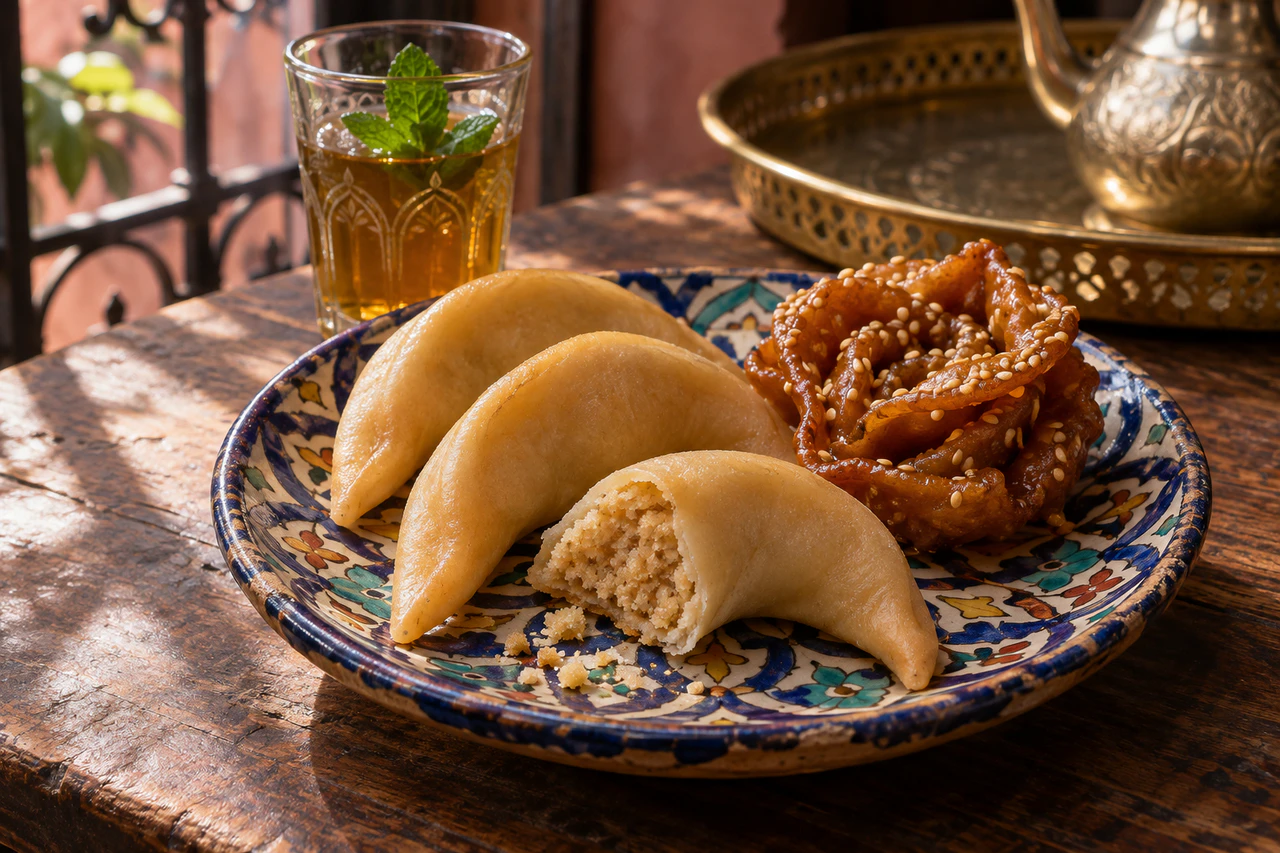
Gazelle horns, one broken open to show the almond, with chebakia and mint tea. AI-generated image.
Marrakech pastries and mint tea in the medina
Where to try gazelle horns and chebakia in Marrakech, how to choose a selection of sweets and what an afternoon snack in the medina costs.
A gazelle horn looks simple until you break it. The thin pastry cracks, the almond filling holds its shape and the scent of orange blossom reaches you before the first sip of tea. Next to it, a chebakia leaves honey on your fingers and a few sesame seeds on the plate. If you’re setting aside an afternoon to try Marrakech’s pastries, buy only a few pieces. One of each kind per person is enough to discover how pastry shops work with almond, honey and floral scents. Moroccan National Tourist Office, Moroccan pastries.
Two sweets to order by name
Gazelle horns with almond and orange blossom
Kaab el ghzal, or gazelle horn, is recognised by its crescent shape and the thin pastry wrapped around the almond filling. The Moroccan National Tourist Office highlights its orange blossom aroma. In the pastry counter it often looks modest next to honey-coated sweets. Ask for one and cut it in two if you are sharing. The filling comes through more clearly when you try it at the start of your snack. Moroccan National Tourist Office, gazelle horns.
In Marrakech you can order it at Pâtisserie Corne de Gazelle Chez Brahim, which gives its address as 137 Rue Riad Zitoun el Jdid. Ask whether they sell by the piece or by weight and confirm the price before they pack your box. If you want to take some home, ask for the dry pieces to be kept apart from the honey-soaked ones, so the thin pastry keeps its texture better. Pâtisserie Chez Brahim.
Chebakia, honey and sesame
Chebakia is fried and soaked in honey. Sesame adds a toasted flavour and the folded shape leaves firm edges that soften where the honey gathers. In Morocco it is linked to Ramadan and may accompany harira when breaking the fast. For a snack outside that context, share it with a glass of tea. If you also bought a gazelle horn, save the chebakia for the second bite and notice how the taste of the drink changes. Moroccan National Tourist Office, chebakia and tea.
From the spice souk to the counter
The official Marrakech guide describes the Mellah as the historic quarter founded in the Saadian era and places one of its entrances on Place des Ferblantiers. A walk through its spice souk lets you ask about sesame, cinnamon and other ingredients common in Moroccan pastries. The quarter’s history gives context to the trade you will see along the way. Both pieces in this guide belong to a repertoire found in different Moroccan cities. Visit Marrakech, the Mellah and Moroccan National Tourist Office, food.
In the quarter’s shops, ask how orange blossom water is used and notice whether the seller talks about scenting the pastry or the filling. A small amount can be picked out in a piece with little coating. If you want to buy ingredients, ask the weight and price before choosing the pack size. If you are buying pastries, ask the name of each piece and keep a note. When you open the box later, the shape helps you recognise them.
If you want to see how pastries are served in different formats, start at a pastry shop where you can choose piece by piece. Then look for a medina café, such as Café Clock in the Kasbah area, to sit down with tea. The pastry shop lets you choose a specific shape or filling. A café menu may offer a portion to share, with a selection worth checking when you order. For a short visit, choose your stop based on how much time you have to linger. Café Clock, Marrakech location.
What a tea and pastry snack costs
The menus consulted list 35–60 MAD for a portion of Moroccan pastries. Café Clock advertises its portion at 35 MAD on its main menu, while Le Marrakchi, next to Jemaa el-Fnaa, lists Moroccan pastries at 60 MAD. These are approximate prices and may change. Ask which pieces each selection includes, how many there are and whether drinks are extra. If you only want to try gazelle horns, ask for the piece by name and check the price at the counter. Café Clock menu and Le Marrakchi menu.
How to order and share tea
Green mint tea is offered as a welcome in Morocco and served in small glasses. For a snack with several people, ask whether it is better to order a pot for the table. If you want less sugar, say so before it is made. Try the tea on its own first to pick out the mint, then take a sip with the sweet. When you serve the shared tray, offer the whole piece to the person next to you first and let everyone choose what to cut. Moroccan National Tourist Office, the tea ceremony.
If you are coming from the Mellah, do your shopping before sitting down so you can decide calmly which pieces to keep. If you plan to eat what you bought in a café, ask whether you can eat pastries bought elsewhere. You can also order its own selection and save your box for later. To choose between the two, think about how long you want to sit and whether you are more interested in trying one particular speciality or sharing several.
Tips for British visitors
- Check what’s in the selection — Café Clock and Le Marrakchi both list Moroccan pastries, but their menus do not name the pieces in each portion. Ask what’s included before ordering. If you want a particular pastry, such as a gazelle horn, ask for it by name. Menus checked 22 November 2026. Café Clock · Le Marrakchi
- Ask about allergens before a mixed plate — Tell the shop or café about any allergy before you order. The FCDO notes that allergen information is not consistently provided in Morocco and that cross-contamination risks may be higher than in the UK. If staff can’t confirm the ingredients or how the pastries were handled, avoid the pieces you’re unsure about. FCDO Morocco health advice