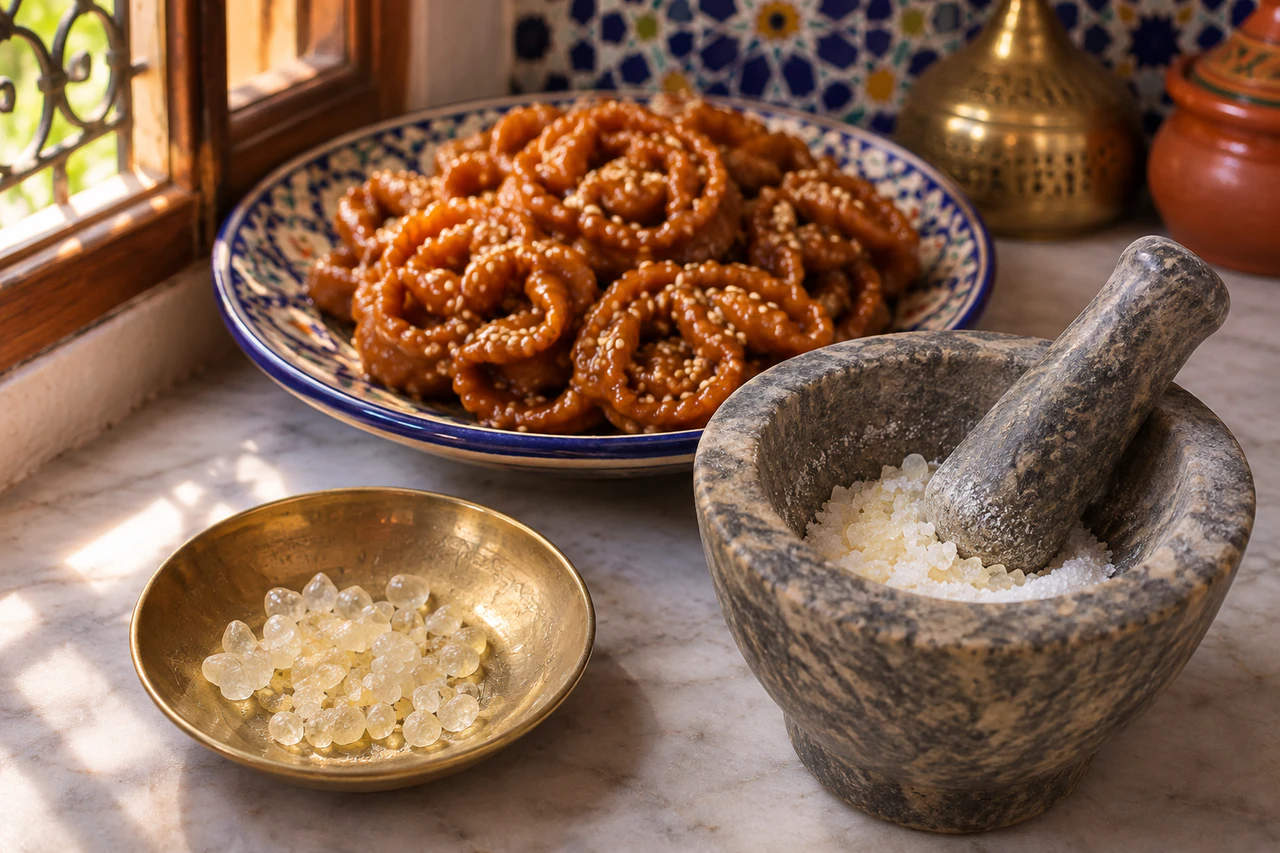
Gum mastic tears, crushed with sugar for Moroccan sweets such as chebakia. AI-generated image.
Gum mastic for Moroccan baking: where to buy it in the UK
Learn what gum mastic is, how to crush it with sugar for Moroccan sweets, where to buy food-grade mastic in the UK and what to do if you cannot find it.
Gum mastic, known as meska horra in Morocco, is the dried resin of the mastic tree (Pistacia lentiscus). It comes as small, brittle droplets called tears and gives sweets such as sellou and almond briouats a pine-like aroma. For home baking, buy tears sold for cooking and crush them with a little sugar before adding them to the recipe.
How to crush gum mastic with sugar
- Measure the mastic first. Follow the recipe’s quantity before adding sugar. If it specifies a number of tears, count them out while they are whole.
- Crush it with a little granulated sugar. Use a mortar and pestle or the back of a spoon in a small bowl. The sugar helps keep the resin from sticking to the utensil or clumping. If the recipe already calls for granulated sugar, take a little from the amount you’ve measured.
- Keep crushing until powdery. Break up any visible pieces of resin so you can distribute the mastic evenly through the dough, filling or dry ingredients. Stick to the recipe’s amount, as too much can make the finished sweet gummy.
Where Moroccan bakers use it
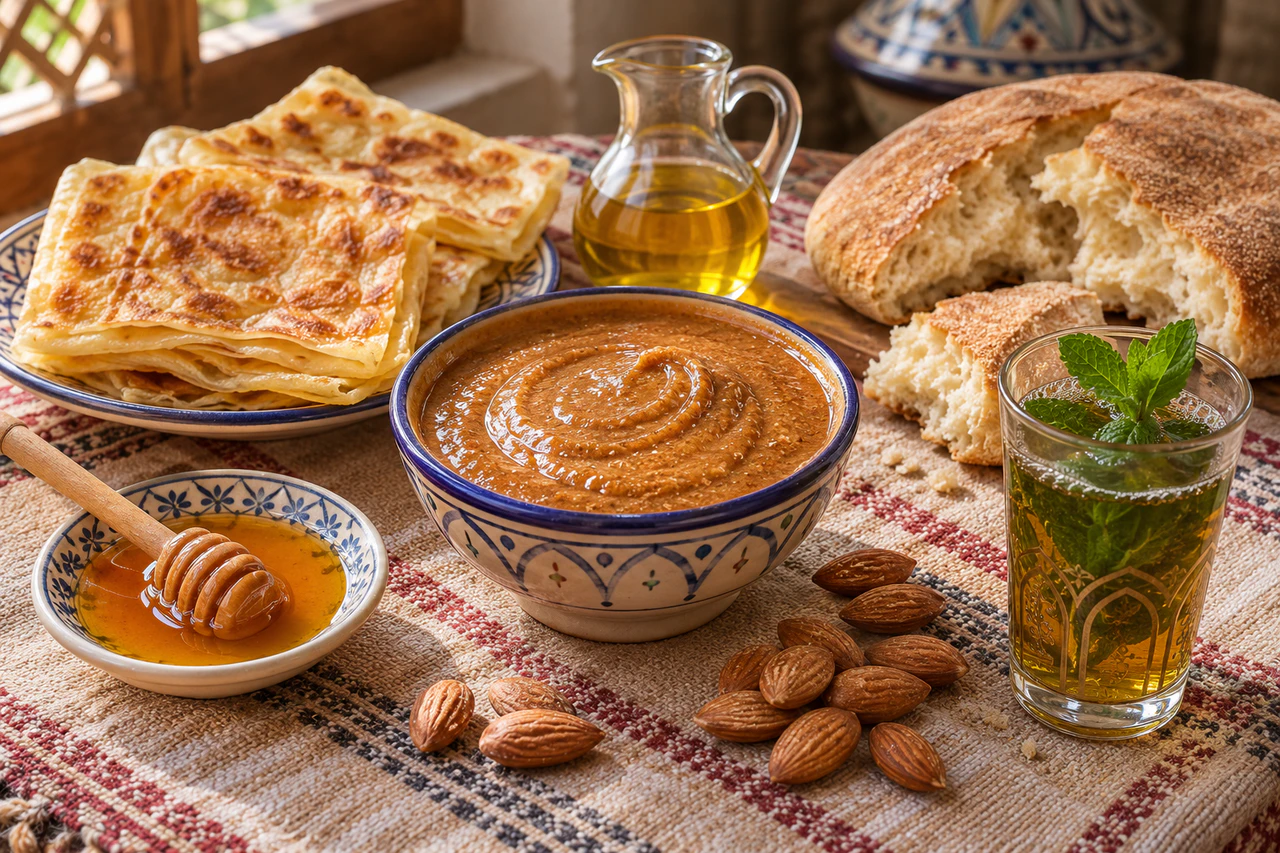
- Sellou. Ground mastic can be sifted with the toasted flour, icing sugar and spices. Christine Benlafquih’s published version makes it optional, so you can leave it out and still make the sweet with its toasted sesame, almonds, cinnamon and anise.
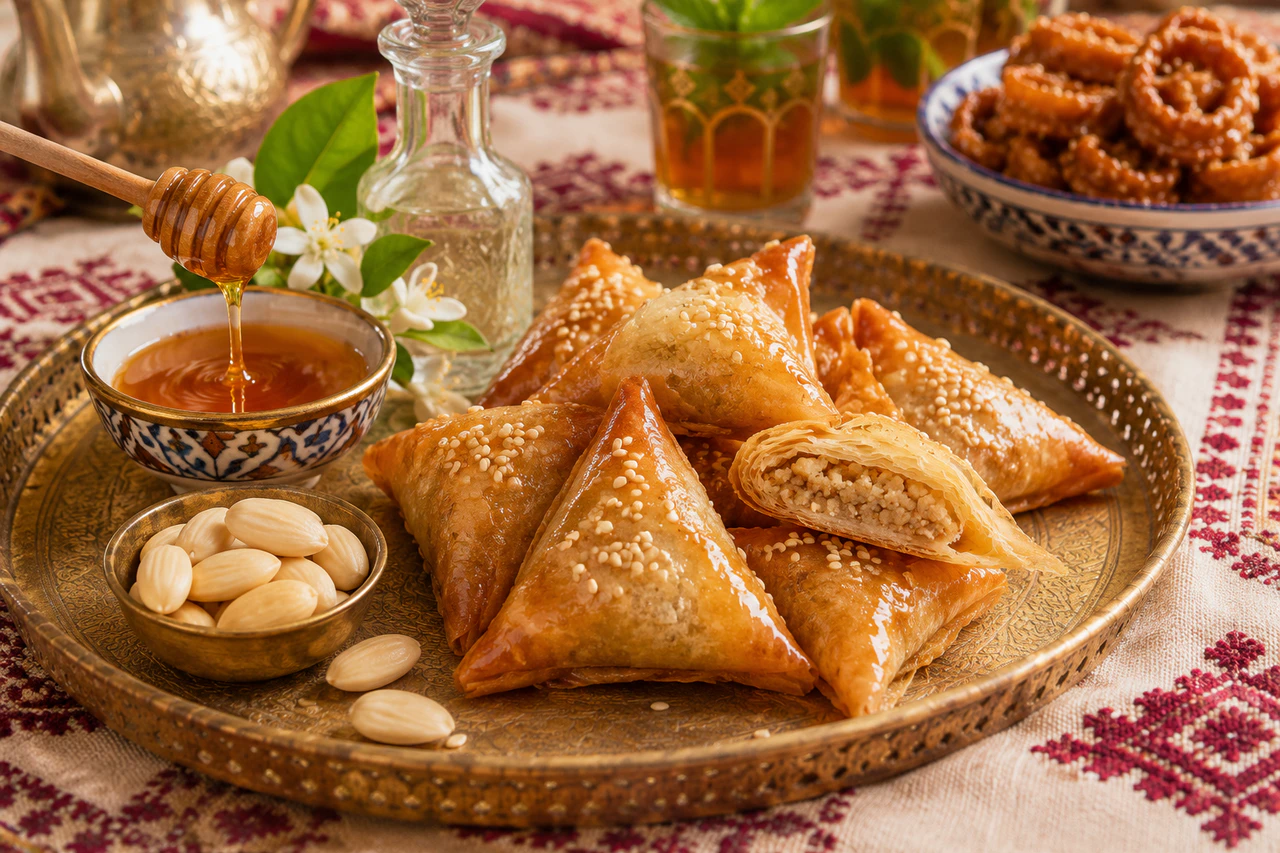
- Almond briouats. In Nada Kiffa’s published version, the mastic goes into the almond paste with cinnamon and orange blossom water, before the filling is wrapped in pastry and fried.
- Chebakia. Some cooks crush mastic with sugar for the sesame dough. Other versions use gum arabic, so check the ingredient list of the recipe you’re following before you buy either one.
For cooks in the UK
Look for gum mastic, mastic tears or Chios mastic, sold specifically as a cooking ingredient. These UK online listings were checked 22 November 2026:
- Sous Chef lists Chios gum mastic crystals for sweet and savoury cooking. Sous Chef Gum Mastic
- Steenbergs lists dried Chios mastic tears as a cooking ingredient. Steenbergs Mastic
- Agora Greek Delicacies lists Chios mastic tears specifically for cooking and baking. Agora Chios Mastic Tear for Cooking
If you can’t find it: where the recipe marks mastic as optional, as in Benlafquih’s sellou, leave it out. Taste of Maroc also notes that small amounts of food-grade gum arabic can sometimes be used in Moroccan recipes in place of mastic. Gum arabic has very little flavour, so the pine-like aroma will be missing. Follow a version that specifies gum arabic if you want to use it in chebakia.
Frequently asked questions
Is gum mastic the same as gum arabic?
They come from different trees. Mastic is resin from the mastic tree and has a pine-like aroma. Gum arabic comes from acacia trees and has very little flavour. Both can look like translucent dried droplets, so check the name on the packet.
Can I buy mastic already ground?
Yes. Culinary mastic is sold as whole tears or as powder. Whole tears are handy when a recipe tells you how many to crush. If using powder, follow the recipe’s ground measurement where one is given.
Can I put whole mastic tears straight into the dough?
Crush them to a powder first. A little granulated sugar helps you break up the sticky resin so it mixes evenly through the dough.
What does gum mastic taste like?
It has a pine-like, resinous flavour. In Moroccan sweets it adds fragrance alongside ingredients such as cinnamon and orange blossom water.
Do I need gum mastic for sellou?
It depends on the recipe. Benlafquih’s version lists it as optional. If you omit it, the toasted flour, sesame and almonds still give sellou its characteristic flavour.
How do I know I’m buying the right kind?
Choose a product explicitly sold for cooking or baking. A listing that identifies the contents as culinary mastic tears or ground gum mastic makes it easier to match the product to your recipe.
Sources: Taste of Maroc, Mastic in Moroccan Cooking; Taste of Maroc, Gum Arabic in Morocco; Taste of Maroc, Sellou; Taste of Maroc, Almond Briouats; OhDelices Culinary Academy, Moroccan Chebakia; WIPO, Moroccan culinary scoping study; Sous Chef, Gum Mastic; Steenbergs, Mastic; Agora Greek Delicacies, Chios Mastic Tear for Cooking.