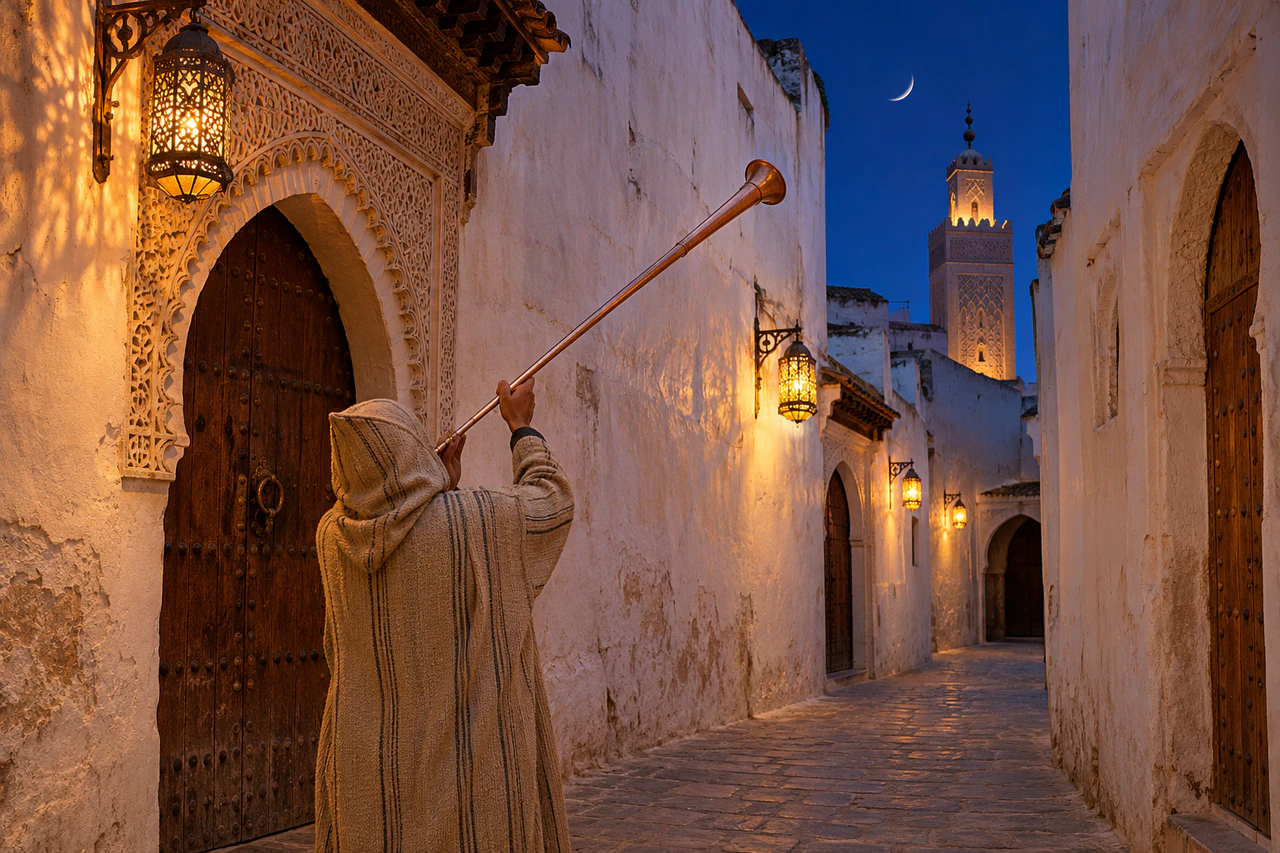
The nafar wakes people up for suhur before dawn. AI-generated image.
Ramadan traditions in Morocco: how people observe the holy month, from the nafar to Eid
A guide to Ramadan in Morocco: the fast, ftour and suhur, the nafar who wakes up the medina, tarawih nights, the 27th night with children's first fast, and Eid al-Fitr.
Ramadan is the ninth month of the Islamic calendar and, in Morocco, it changes the rhythm of the whole country for about thirty days. Between dawn and sunset, those who fast neither eat nor drink; at sunset, families gather around the ftour, and the nights stretch out with prayers, visits and evening walks. This guide explains how the month is lived, from the first night to Eid.
When it starts
The Islamic calendar is lunar, so Ramadan starts about eleven days earlier each year in the Gregorian calendar. In Morocco the month officially begins when the crescent moon is seen with the naked eye, and the Ministry of Habous and Islamic Affairs announces it the evening before. In 2027 it is expected around 8 February, with Eid al-Fitr around 9 or 10 March. Prayer times for each city (and therefore the exact ftour time) are published by the Ministry of Habous.
A day in Ramadan
- Before dawn, suhur (s’hour): the last meal before the fast begins.
- During the day, life slows down: many offices and shops change their hours, and activity is concentrated in the morning and in the hours before sunset, when markets fill with people shopping for the evening.
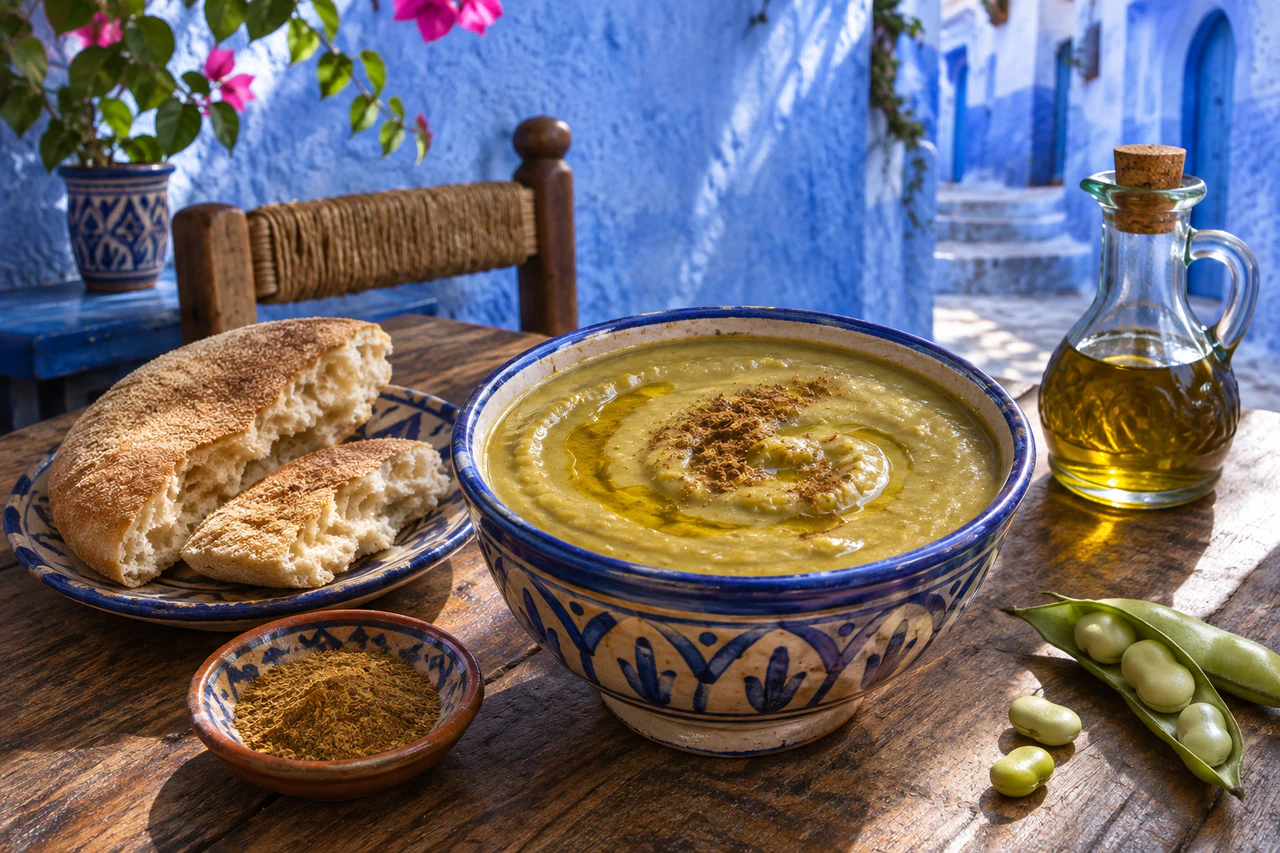
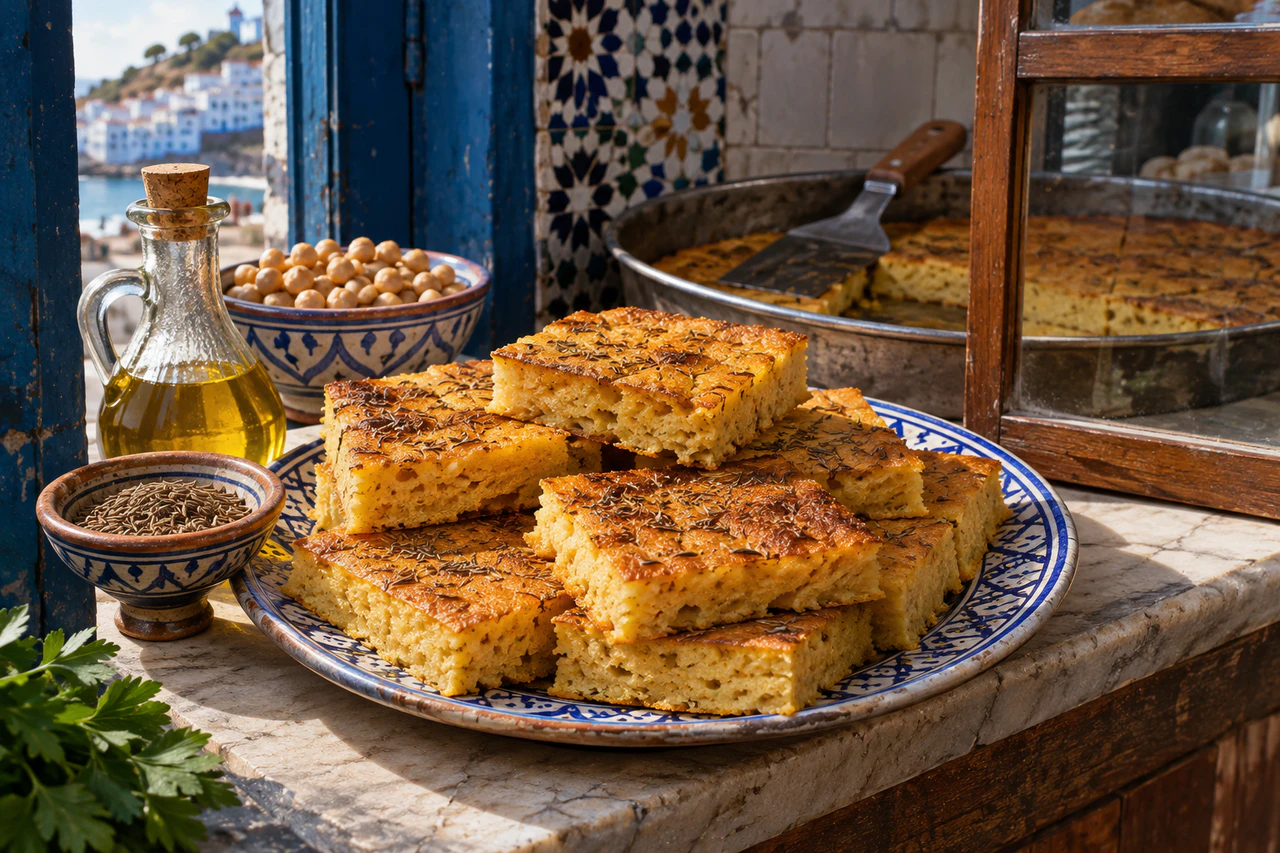
- At sunset, the ftour: with the call to the maghrib prayer the fast is broken, almost always with dates, then harira, chebakia, sellou, msemen and tea. We explain it in detail in Moroccan iftar menu.
The nafar, the medina’s alarm clock
One of Morocco’s distinctive Ramadan traditions is the nafar (or neffar): a man who, before dawn, climbs the minaret or walks the streets blowing a long copper trumpet, more than a metre long, to wake people up for suhur. For centuries he was the only alarm clock; today, with phones and new neighbourhoods, he has become rare and is heard mostly in the old medinas, such as Taroudant’s. He usually does it voluntarily and receives donations at the end of the month. According to the MAP news agency, the tradition is recognised as part of Morocco’s intangible heritage, and in 2025 there was a woman nafar for the first time.
The nights: tarawih and evening strolls
After the ftour, many people go to the mosque for tarawih, the special night prayers of this month. Ramadan nights are the liveliest of the year: families visiting each other, cafés that stay busy late into the evening and illuminated streets.
The 27th night: Laylat al-Qadr and children’s first fast
Laylat al-Qadr (“the Night of Destiny”) is the most important night of the month; in Morocco it is celebrated on the night of the 26th to the 27th. Traditionally, young children do their first fast that day: girls wear a caftan and have their hands decorated with henna, they are photographed and receive small gifts or money. For girls, the celebration is especially important.
The end: Eid al-Fitr
The month ends with Eid al-Fitr, also called Eid Sghir (“the small feast”) in Morocco. Before the Eid prayer, every family pays zakat al-fitr, a charitable gift for each member of the household whose minimum amount is set every year by the Higher Council of Ulema (in 2026 it was 25 dirhams per person). Then come family visits, new clothes and trays of sweets.
If you visit Morocco during Ramadan
It is a great time to experience the change in daily life during Ramadan, with a little flexibility: around ftour, check opening hours before heading out, and during the day it is best to be discreet when eating or drinking in the street. We cover it in detail in our guide to visiting Morocco during Ramadan.
Tips for British visitors
- Keep your dates flexible. The provisional Moroccan calendar lists Monday 8 February 2027 as the first day of Ramadan and Wednesday 10 March as Eid al-Fitr. If you’re travelling specifically for the first ftour or for Eid, leave yourself a day either side and check the Moroccan announcement before making fixed plans. Ramadan calendar · Eid calendar · Ministry of Habous and Islamic Affairs
- Plan daytime meals indoors. Ask your riad or hotel where you can have breakfast or lunch and confirm the kitchen hours. Venues serving food during fasting hours may seat visitors in a separate area. Avoid eating or drinking in public during daylight. GOV.UK Morocco travel advice
- Take change for the evening souk. If you’re buying dates or sweets from stalls, carry small-denomination Moroccan dirhams and compare offers before buying. Lonely Planet’s guide to Moroccan souks
Sources: Ministry of Habous and Islamic Affairs; MAP/AllAfrica, the nafar of Taroudant; Africanews, the nafar; Morocco World News, the endangered neffar; Le360, Laylat al-Qadr and children’s first fast; Bladi, the Night of Destiny; maroc.ma, zakat al-fitr 2026; timeanddate, 2027 dates.