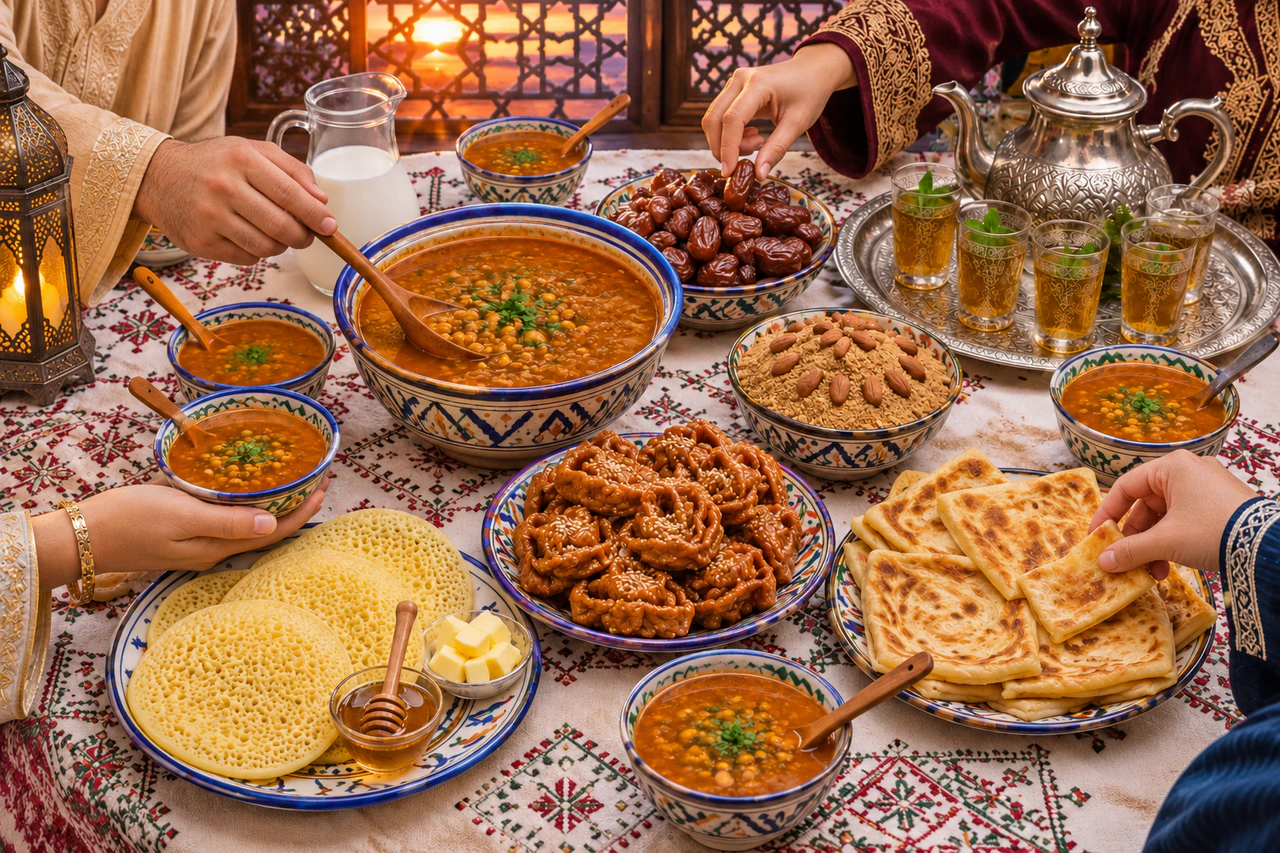
A Moroccan table ready to break the fast, with the sunset behind the latticed window. AI-generated image.
Moroccan iftar menu: what Moroccans eat to break the fast in Ramadan
What's on the ftour (iftar) table in Morocco during Ramadan: dates, harira, chebakia, sellou, msemen, baghrir and mint tea, how it changes by region, and how to experience it as a visitor.
During Ramadan, Morocco pauses at sunset. When the muezzin calls the maghrib prayer, the day’s fast ends and the ftour begins (from fatara, “to break the fast”): the meal that breaks the fast, known elsewhere as iftar, and the moment many look forward to each day. It is eaten with family, sometimes with neighbours or at the mosque, and its table is so distinctive that many Moroccans associate it with Ramadan for life.
Dates come first
The ftour usually opens with a few dates and water or milk. The tradition goes back to the Prophet, who is said to have broken his fast with a few dates or with water. Dates, rich in natural sugars, are a gentle way to start eating again after many hours. In Morocco, the dates of the Tafilalet are famous: read more in Tafilalet dates.
Harira: the Ramadan soup
This is the centrepiece. Harira is a thick soup of tomato, lentils, chickpeas, herbs, spices and often a little meat, eaten hot after the first prayer. You can have it all year round, but in Ramadan it is on almost every table, and the smell of harira is one of the strongest memories of the month. Find the step-by-step recipe in Moroccan harira.
The sweets: chebakia and sellou
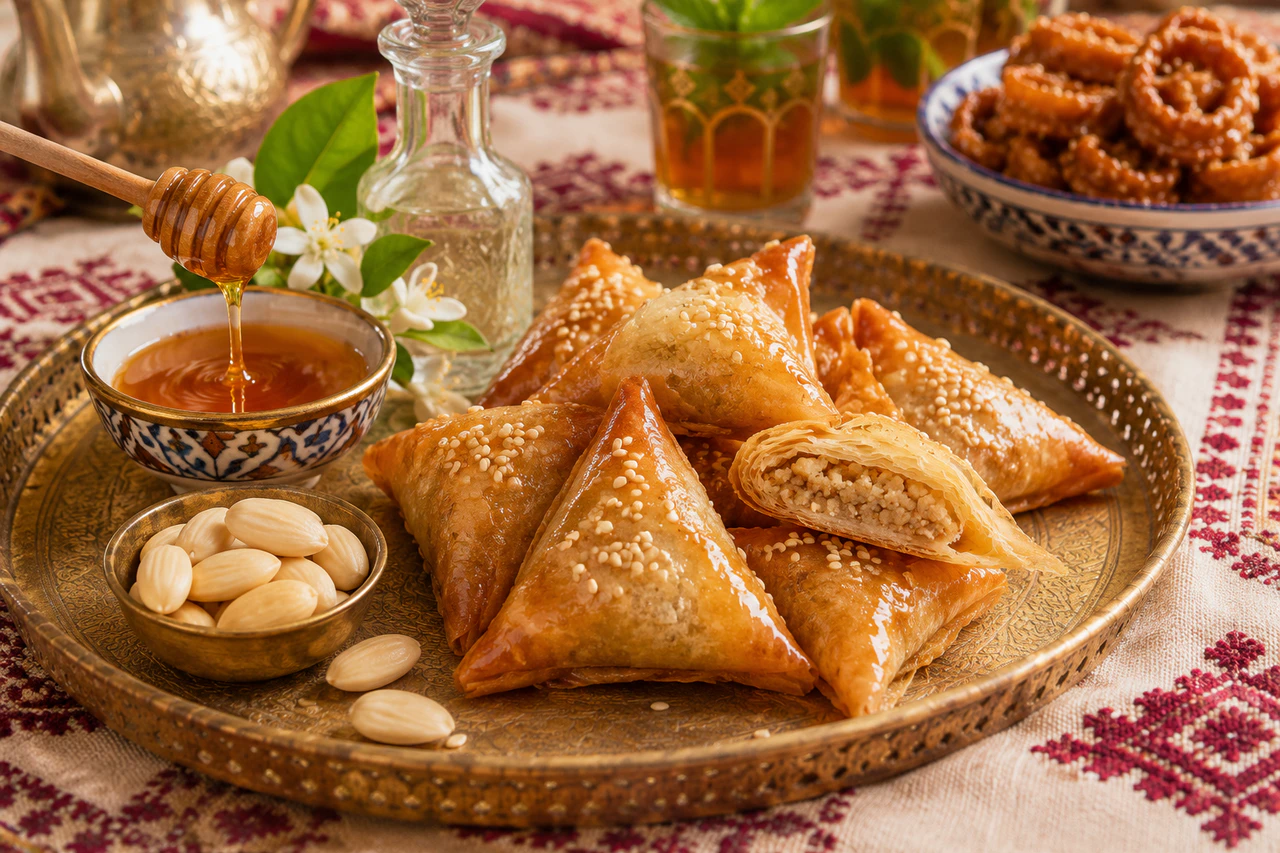
- Chebakia: sesame dough shaped like a flower, fried and soaked in honey. It is hugely popular in Ramadan and much less so the rest of the year; many families make it days before the month begins. Recipe in Chebakia.
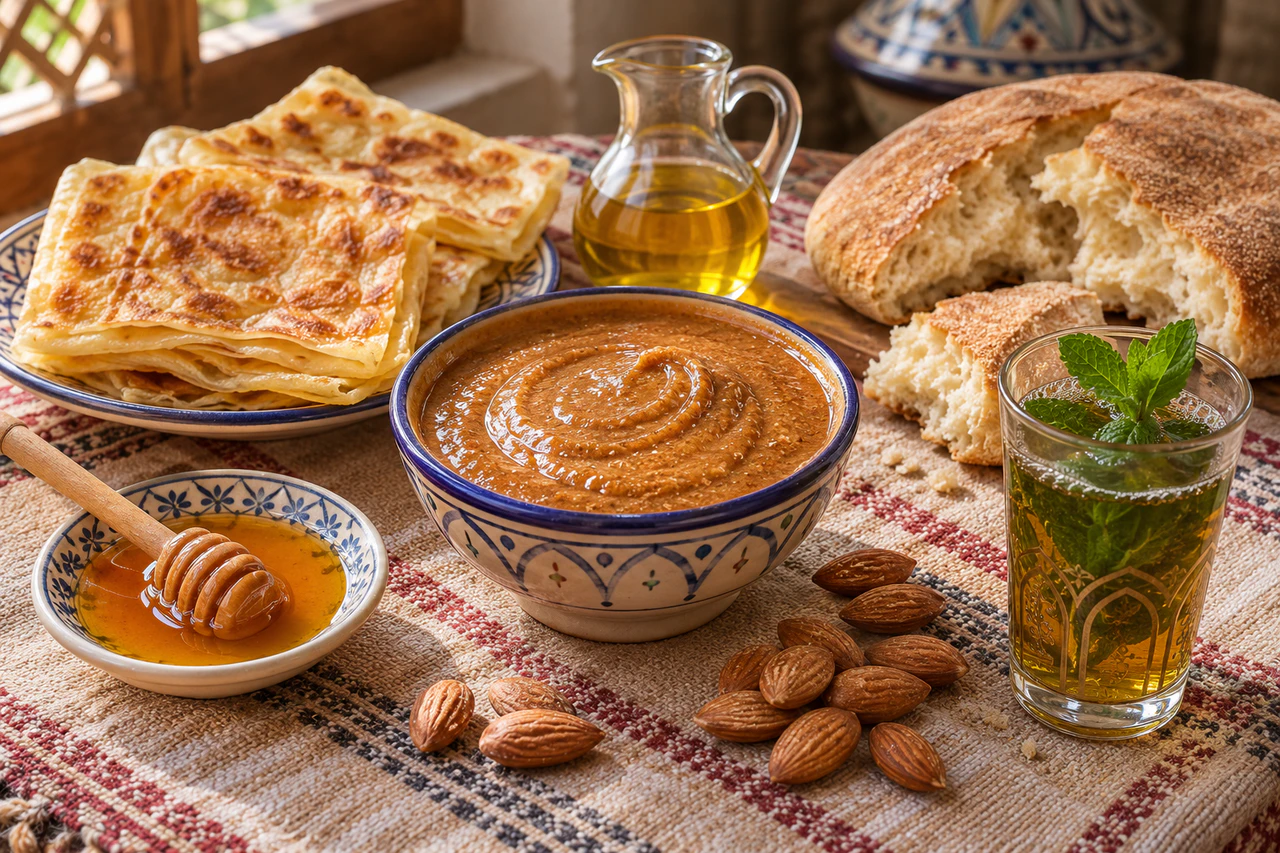
- Sellou (or sfouf): a fragrant mix of toasted flour, almonds and sesame, served by the spoonful and kept for weeks in a jar.
Breads and pancakes
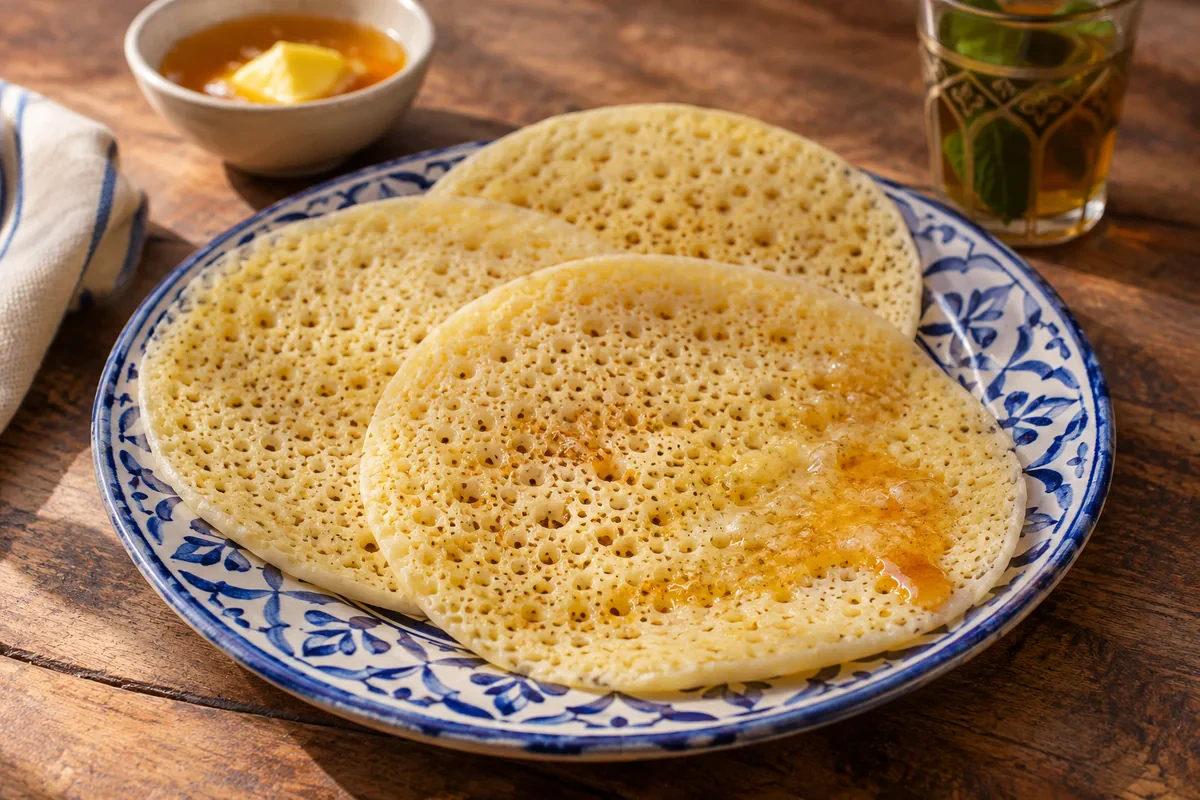
Msemen, flaky, square Moroccan flatbreads, and baghrir, the “thousand-hole pancakes”, are never missing. They are eaten with a warm mixture of honey and butter, and almost always with mint tea. See our recipes for msemen and baghrir. There are often briouats too, small triangles or rolls of thin pastry with a filling, and in summer fresh juices.
Three ftour menus
- The classic: dates with milk or water, a bowl of harira, chebakia and mint tea.
- With breads: dates, harira, msemen and baghrir with honey and butter, and a glass of freshly squeezed juice.
- Festive, for guests: the classic plus briouats, sellou and a bowl of fruit; in some homes, a pastilla.
What to make ahead: chebakia and sellou are made days before the month begins and kept in jars, so each afternoon only the harira and the pancakes need to be prepared.
It changes from region to region
There is no single Moroccan ftour. According to the Moroccan press, in Fez the table is especially sweet; in Meknes stuffed rghaif are served alongside harira, chebakia and sellou; and in Marrakech you may find pastilla or trid. Every household also has its own order and quantities.
After the ftour
The ftour is not the only meal of the day. Later in the evening many families have dinner, and before dawn comes the suhur (s’hour in Morocco), the last meal before the next day’s fast. Ramadan nights are long: tarawih prayers in the mosques, lively streets and busy cafés.
If you visit Morocco during Ramadan
- At ftour time almost everything stops: shops and restaurants close for a while and the streets empty. It’s a good moment to be at your accommodation or at a restaurant that serves ftour.
- Many riads and restaurants offer ftour for visitors: the best way to try it.
- If you are invited to a ftour in someone’s home, accept: it is a very Moroccan gesture of hospitality.
For cooks in the UK
- Where to buy — Waitrose lists whole Medjool dates. Serve them with water or milk at the start of ftour. Check the pack for country of origin if you’re looking specifically for Moroccan dates. Product page checked 22 November 2026. Waitrose Medjool Dates · TableMaroc ftour menu
- Make the baghrir ahead — Cook the pancakes plain, then cool them in a single layer so they won’t stick together. Freeze them with a small square of cling film between each pancake. Defrost them in the fridge and serve with the warm honey and butter mixture on the side, so everyone can dip their own. Taste of Maroc’s baghrir recipe · Food Standards Agency defrosting guidance
Sources: Hespress, regional Ramadan food traditions; Morocco World News, the 10 essential ftour foods; MAP/AllAfrica, the ftour in Fez; National Geographic, breaking the fast with soup in Morocco.