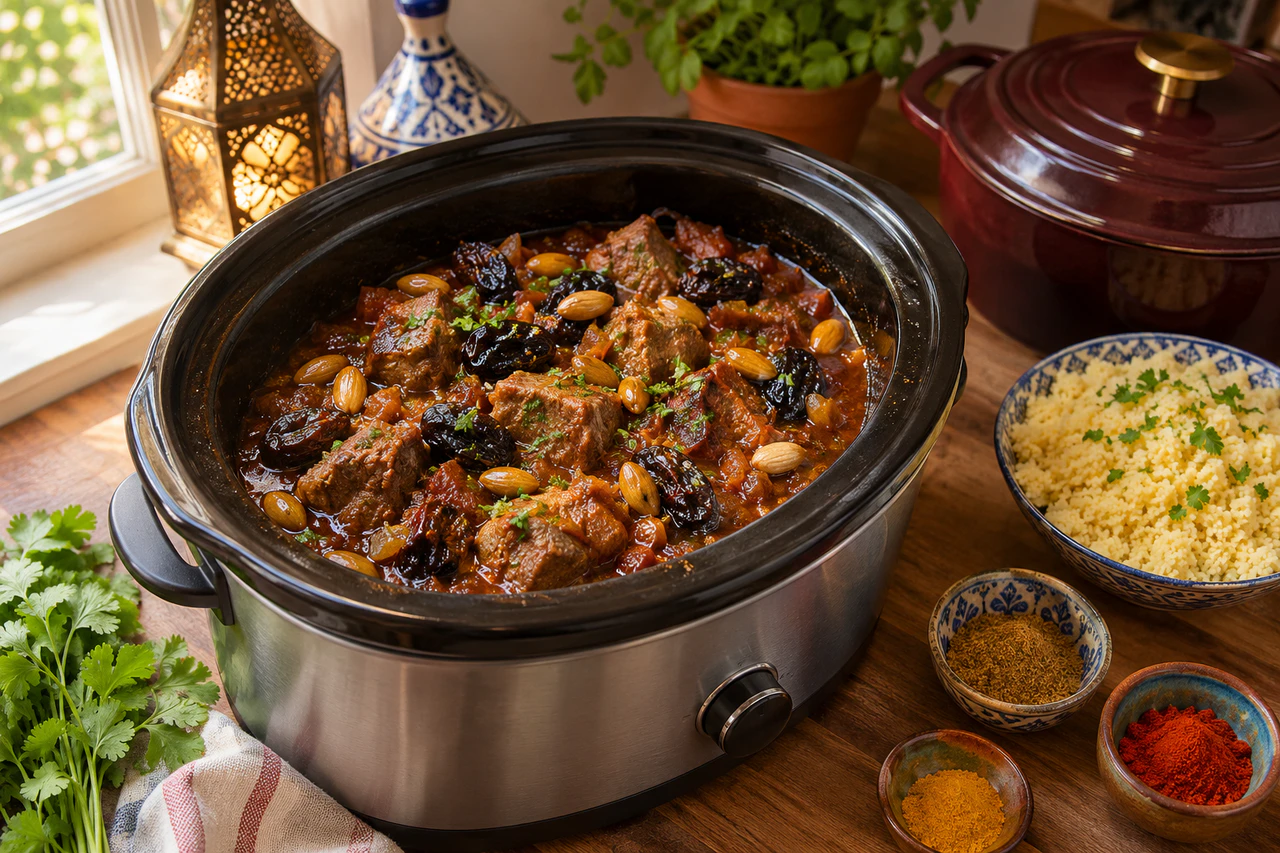
Lamb with prunes and almonds cooked in a slow cooker, with couscous. AI-generated image.
Moroccan cooking with a slow cooker, oven and air fryer
Find out which Moroccan dishes suit a slow cooker, oven or air fryer, what to keep on the hob, and how to cool, freeze and reheat cooked food safely at home.
A slow cooker suits some Moroccan-style braises, a domestic oven can roast a méchoui-style lamb shoulder, and an air fryer can crisp cheese briouats. The method matters most when it gives a dish its texture or finish, as with steamed couscous, pan-cooked msemen and oil-fried chebakia. If you’re cooking ahead, harira is a good place to start.
Which method suits which dish?
| Dish | Method to use | What to make ahead |
|---|---|---|
| Lamb, chicken or beef tagine | Use a recipe written for a slow cooker. The published examples use different ingredients and methods for each meat. | General Food Standards Agency guidance covers freezing cooked leftovers. Freezer quality depends on the particular recipe. |
| Kefta tagine with eggs | Cook the meatballs in tomato sauce and finish with the eggs using the hob recipe. Air-frying the meatballs only covers one part of the dish. | Freezer quality for the complete dish with eggs is unverified. |
| Harira | Use the Moroccan hob recipe or an appliance-specific slow-cooker adaptation. | Freeze the soup, or freeze the base before adding the flour thickener if following that method. |
| Couscous and its stew | Follow the seven-vegetable couscous recipe to steam the grains over the simmering broth. | If cooking ahead, freeze the cooked stew under the general leftovers guidance and steam the grains fresh. Freezer quality for traditionally steamed grains has not been verified here. |
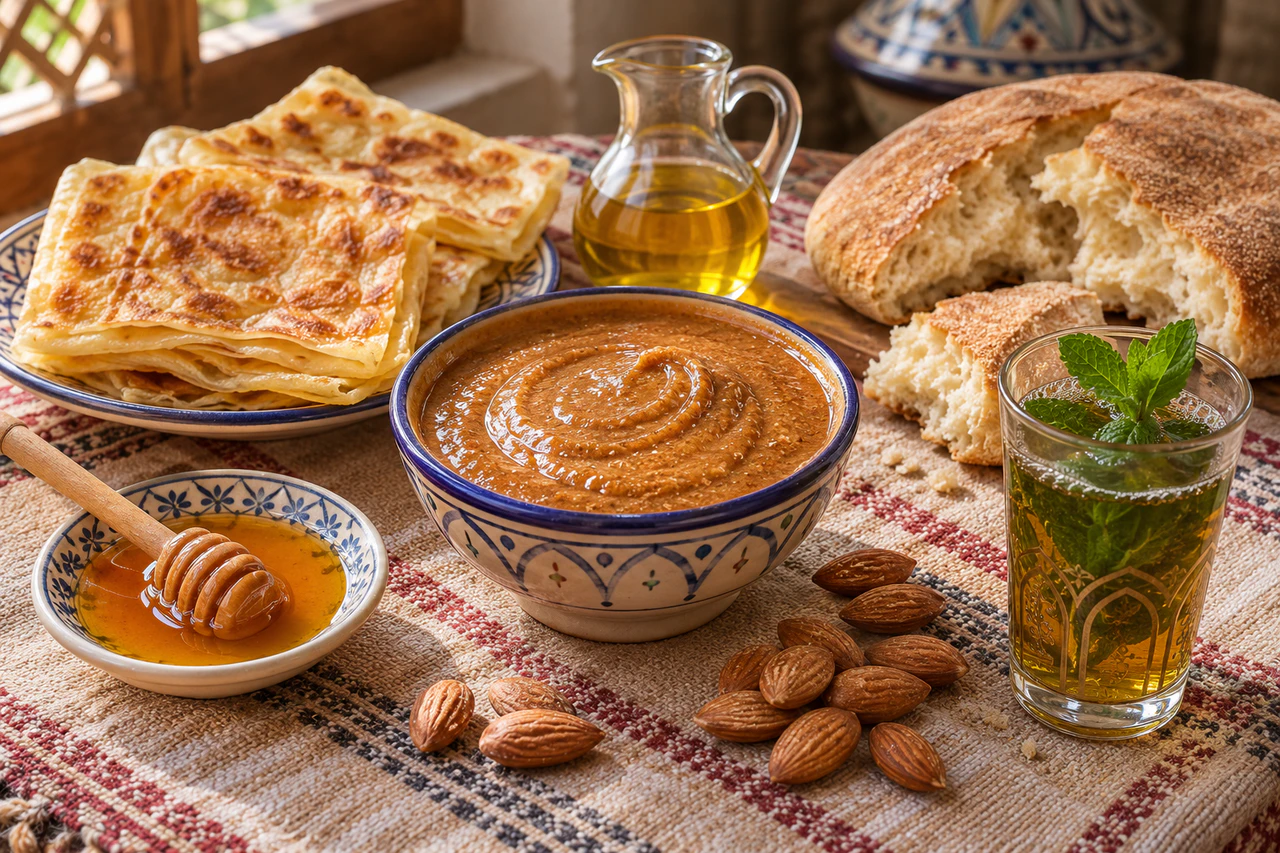
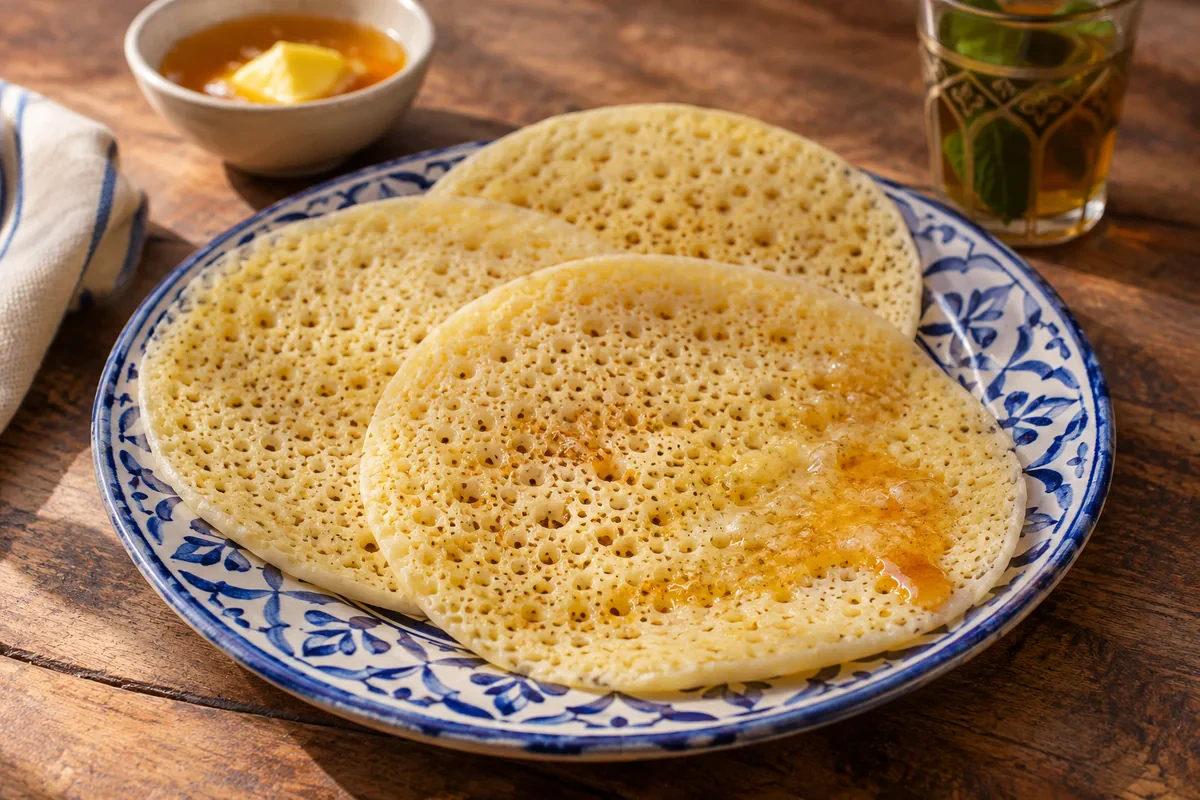
| Msemen | Cook the layered dough in a pan. | Freeze the cooked flatbreads separately so you can take out what you need. |
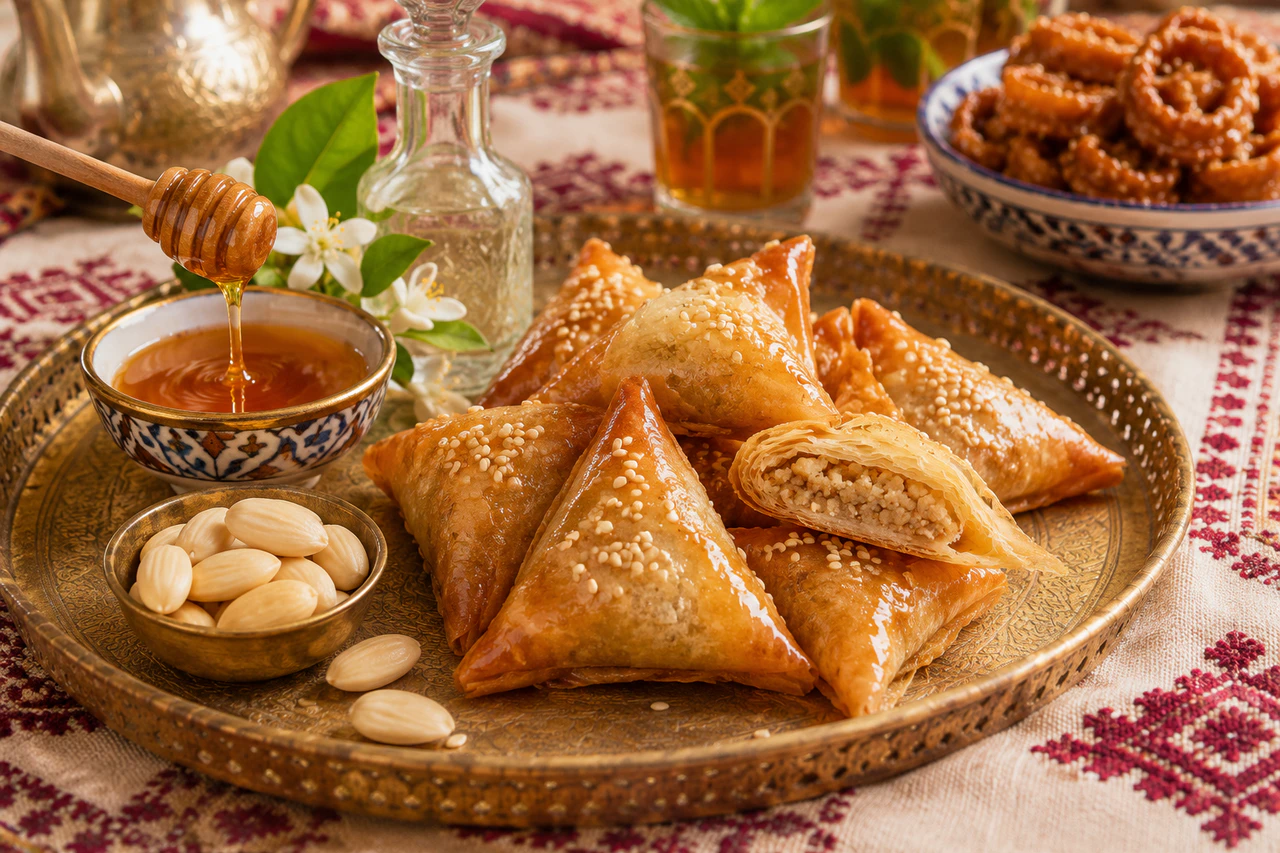
| Briouats | Air-fry the documented cheese version or oven-bake the cited savoury kefta version. Use the oil-fried method for almond and honey briouats. | The air-fryer cheese recipe gives instructions for freezing the shaped pastries before cooking. |
| Chebakia | Fry the shaped pastry in oil and dip it in honey, as in the chebakia recipe. | Follow the recipe’s storage directions. Freezer quality and an equivalent air-fryer finish are unverified. |
| Méchoui | Use a domestic-oven recipe for lamb shoulder. Traditional Moroccan méchoui can be made with a whole lamb roasted in an earthen oven or pit. | General leftovers guidance applies to the cooked lamb. The quality of the browned exterior after freezing is unverified. |
| Tanjia | The Marrakech method cooks meat slowly in a sealed earthenware jar using residual heat. See the tanjia guide for the dish. | A dependable slow-cooker conversion and dish-specific freezer guidance are unverified. |
| Zaalouk | Use the oven if you’re following a roasted-aubergine version. The TableMaroc zaalouk recipe gives the Moroccan aubergine and tomato preparation. | The texture after freezing and reheating is unverified for the cited version. |
Slow cooker: tagines and harira
Choose the slow-cooker recipe before you shop. Good Food’s slow-cooker lamb tagine is a UK adaptation with a stock cube and dried fruit. There are separate appliance recipes for chicken and chickpea tagine and beef with butternut squash. Follow the quantities, setting and timing for the version you choose.
For the Moroccan preparations, start with the tagine guide, lamb with prunes and almonds or chicken with preserved lemon and olives. The appliance recipes above establish methods for their own ingredients. They give no verified timings or liquid quantities for converting those TableMaroc recipes.
Harira has its own slow-cooker version. Crock-Pot’s harira recipe is an appliance adaptation. If you’re making the Moroccan hob version to freeze, Taste of Maroc confirms that harira can be frozen, and Gâteau et Cuisine Rachida describes the option of freezing the base before adding the flour thickener. Taste of Maroc · Gâteau et Cuisine Rachida
Oven: lamb shoulder, savoury briouats and zaalouk
For méchoui, choose a recipe for the cut you’re cooking. A domestic-oven lamb shoulder is an adaptation of Moroccan méchoui. Use a shoulder recipe that sets out the roasting and browning stages, and serve the lamb with cumin salt. The traditional whole-lamb method has its own oven and scale. Méchoui lamb shoulder with cumin salt · Exotic Morocco’s home-oven method · WIPO and OMPIC study of Moroccan food traditions
Briouat methods depend on the filling and pastry. A recipe adapted from Moroccan cook Choumicha bakes filo triangles filled with kefta and dried apricots. The almond-and-honey recipe fries the pastry before coating it in honey. Follow the method for the briouat you want to make. Baked kefta briouats · Oil-fried almond briouats
For zaalouk, the oven can roast the aubergine. The finished salad combines cooked aubergine with tomato and seasoning. An oven adaptation can also cook the aubergine and tomato mixture together after the initial roasting stage. Moroccan zaalouk · Taste of Maroc’s Moroccan preparation · Plant Based News’s oven adaptation
Air fryer: where it helps
MarocMama’s air-fryer cheese briouats are a specific modern adaptation, with instructions for freezing the shaped pastries before cooking. Use that recipe for the cheese filling and pastry it specifies. For honey-soaked chebakia and almond briouats, keep the oil-fried method in the cited Moroccan recipes. Philips advises applying oil to the ingredients and keeping it out of the air-fryer pan. Philips UK on using oil · Traditional chebakia
Check the instructions for both your air fryer and the vessel before using ceramic cookware. Philips allows ovenproof ceramic in the appliances covered by its guidance and calls for space around the dish so air can circulate. If you can’t verify that your clay tagine or tanjia jar is suitable and fits with the required clearance, use another method. Philips on suitable cookware
For cooks in the UK
- For a slow-cooker dinner, choose the lamb, chicken or beef recipe before buying the meat so you can match the cut and quantities. Start with the Good Food lamb recipe if you want a UK slow-cooker adaptation.
- For a Friday couscous, make the broth ahead if that helps with lunch, then steam the semolina grains over simmering broth. The Moroccan seven-vegetable recipe and Taste of Maroc’s couscoussier method explain the repeated steaming.
- For breakfasts to make ahead, cook msemen in a pan, then freeze the flatbreads separately. That way you can take out just what you need. Guide to freezing cooked msemen
Food safety for batch cooking
- Cool promptly. Divide a large batch of soup or stew into smaller portions so it cools more quickly. The Food Standards Agency advises refrigerating cooked food within one to two hours and eating refrigerated leftovers within 48 hours, or freezing them if you won’t eat them within that time. FSA chilling and freezing guidance · FSA batch-cooking guidance
- Defrost in the fridge. Use the food within 24 hours of it fully defrosting. FSA defrosting guidance
- Reheat once, until steaming hot throughout. Reheat only the portion you need. The FSA gives the hob, microwave and oven as reheating options. FSA cooking and leftovers guidance · FSA batch-cooking guidance
- Handle cooked rice separately. Cool it as quickly as possible, ideally within one hour, and keep refrigerated rice for no more than one day before reheating. Reheat it only once, until steaming hot throughout. The published limit is for rice. For cooked couscous, use the general cooked-leftovers guidance above. FSA rice guidance · FSA general leftovers guidance
Frequently asked questions
Can I cook lamb tagine in a slow cooker?
Yes. Use a recipe written for the slow cooker, with its own cut of lamb, liquid quantities and setting. Good Food’s version is a UK adaptation. Slow-cooker lamb tagine
Can I cook a complete kefta tagine in an air fryer?
A method for the complete dish could not be verified. For meatballs cooked in tomato sauce with eggs on top, follow the Moroccan kefta tagine recipe.
Can I make méchoui in a UK oven?
Yes, as a home-oven adaptation using lamb shoulder. Follow a recipe for that cut and use its roasting method. Home-oven méchoui · Méchoui with cumin salt
Can I air-fry briouats or chebakia?
There’s a published air-fryer recipe for cheese briouats. For traditional honey-dipped chebakia, use the oil-fried recipe. An air-fryer method that reproduces its finish could not be verified. Air-fryer cheese briouats · Chebakia recipe
Can I freeze harira?
Yes. A Moroccan recipe author confirms that finished harira can be frozen. Another documented approach is to freeze the base and add the flour thickener after defrosting. Follow the cooling, defrosting and reheating guidance above. Taste of Maroc · Gâteau et Cuisine Rachida
Can I freeze cooked couscous?
The FSA’s general cooked-leftovers guidance covers safe freezing and reheating. The quality of traditionally steamed grains after thawing was not verified for this guide. For a meal you’re planning ahead, freeze the cooked stew separately and steam the grains fresh. FSA freezing guidance · Traditional couscous method
Can I freeze msemen?
Yes. Freeze the cooked flatbreads separately so you can remove them one at a time. Follow the pan-cooked msemen recipe for the original preparation. Guide to freezing and reheating msemen
Sources: Good Food; WCRF UK; Amira’s Pantry; Crock-Pot; Taste of Maroc; Gâteau et Cuisine Rachida; MarocMama; Marokkanisch on tanjia; Exotic Morocco; Philips UK; FSA on chilling, freezing and defrosting; FSA on cooking and reheating; FSA on batch cooking and rice.