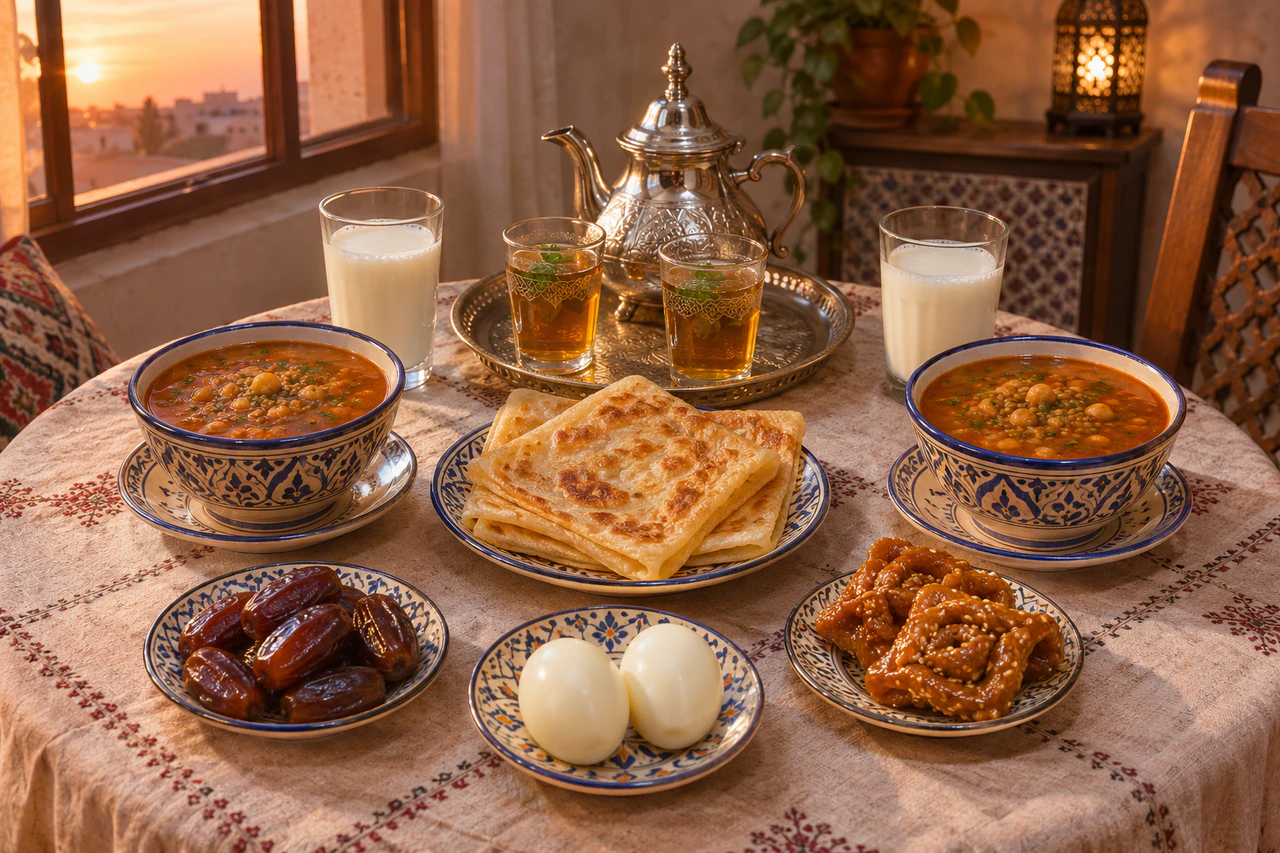
Harira, dates, eggs, msemen, chebakia, milk and mint tea: a ftour for two. AI-generated image.
Moroccan iftar menu for two: harira, msemen and chebakia
Plan a Moroccan iftar for two with harira, dates, msemen, chebakia and mint tea. See how much to serve, what to make ahead and what to warm before sunset.
For a Moroccan iftar for two, start with dates and water or milk, then serve two bowls of harira with warm msemen and a small plate of chebakia. Make the soup base and the sesame sweets ahead, so there’s little to do before sunset besides finishing the soup, warming the pancakes and putting the kettle on.
Ingredients
Serves 2. These are serving quantities for the table. Follow the linked recipes to make each dish.
| What to serve | Amount for two |
|---|---|
| Moroccan harira, finished and ready to serve | About 600 ml |
| Dates | About 60 g |
| Msemen, the square layered pancakes | 2 |
| Chebakia, the sesame and honey sweet | 2–4 pieces, depending on size |
| Hard-boiled eggs, optional | 2 |
| Milk, if serving it with the dates | About 300 ml |
| Moroccan mint tea, made with green tea, fresh mint and sugar to taste | About 300 ml to serve |
| Drinking water | To serve |
Harira preparation adapted from Christine Benlafquih’s recipe at Taste of Maroc. The quantities above are a suggested spread for two.
Method
- Make the soup base and chebakia ahead. Cook the harira base up to the point where you would add the rice or broken vermicelli. Leave the flour-and-water thickener, called tedouira, for serving day. Divide the base into portions, cool it quickly and freeze within two hours of cooking. Let homemade chebakia cool fully before storing it in an airtight container. Taste of Maroc on harira · Taste of Maroc on chebakia · Food Standards Agency on cooling and freezing
- Finish two bowls of harira. Defrost a portion of the base in the fridge and use it within 24 hours of fully defrosting. Bring it to a simmer on the hob, stirring so the lentils don’t catch. Add the rice or broken vermicelli, allowing the time given in the recipe for whichever you choose. When it’s tender, stir in the tedouira gradually and simmer as directed, until the soup has a silky texture. If you’re using already finished harira, reheat it only once, stirring until it’s steaming hot throughout. Taste of Maroc · Food Standards Agency on defrosting · Food Standards Agency on reheating
- Get the sides ready while the soup finishes. Boil the eggs if you’re serving them and halve them once peeled. Cook the msemen following the recipe, or warm cooked ones briefly on the hob. Put the dates and chebakia on small plates, pour the water or milk and brew the mint tea. Taste of Maroc on msemen · Moroccan National Tourist Office on mint tea
- Set everything within reach. At sunset, start with the dates and water or milk. Ladle the harira into two bowls and put the msemen, eggs and chebakia between you. Have the chebakia alongside the soup if you like the contrast of honey and sesame with the tomato broth. Pour the tea when you’re ready for it. EasyDarija on the ftour table · Taste of Maroc on serving harira with chebakia
How a Moroccan ftour table is laid
Ftour is the Moroccan term used for the meal that breaks the Ramadan fast. Dates and a drink often come first, followed by harira. Soup can be served in individual bowls while breads, eggs and sweets are set out to share. Chebakia can be eaten with harira, so you can put it on the table with the soup instead of holding it back for pudding. The breads and accompaniments vary. Msemen appears on some tables, while baghrir and other breads are served in different households and regions. EasyDarija on Ramadan in Morocco · Marokkanisch on msemen and regional ftour tables · Taste of Maroc on chebakia
Our Moroccan iftar menu covers more dishes you might see at ftour. For the customs around the meal and the rest of the month, see Ramadan traditions in Morocco.
For cooks in the UK
- Buy just what you need for the table. Tesco lists Soft Pitted Dates. If you’d rather buy the sweets, UK retailer Raphia lists chebakia, spelt chebbakia, in its Arabesque assortment. Listings checked 22 November 2026.
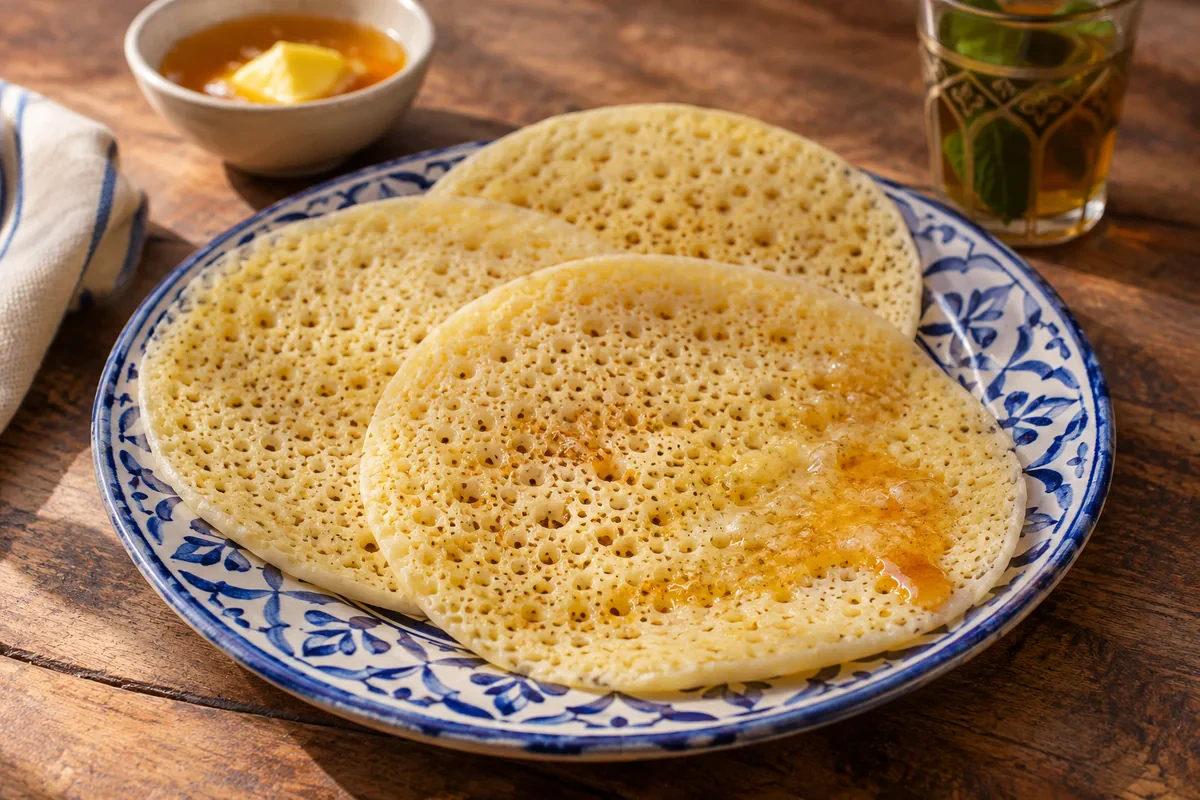
- Use baghrir if you prefer it. Serve Moroccan baghrir in place of msemen if you fancy a soft pancake with holes that catch butter and honey. Either is a Moroccan choice for the table. Marokkanisch on Ramadan breads
- Make a batch of msemen and freeze the spare pancakes. Christine Benlafquih recommends cooling cooked msemen completely before freezing. Her recipe also suggests warming cooked msemen briefly on the hob or in the oven before serving. Taste of Maroc
Frequently asked questions
What do you eat first at a Moroccan iftar?
Dates with water or milk are a common way to break the fast. Serve the harira next, with the breads and sweets already on the table. EasyDarija
Is chebakia served with the soup or after it?
It can go with the soup. Taste of Maroc describes eating the honey-coated sweet alongside harira when breaking the fast in Ramadan. Taste of Maroc
Do I need both msemen and baghrir?
Choose whichever you feel like cooking. For this two-person menu, one kind of pancake is enough. Both appear on Moroccan Ramadan tables. Marokkanisch
Can I make harira in advance for just two people?
Yes. Make the batch, freeze the cooked base in portions before adding the rice or vermicelli and flour thickener, then finish just the portion you need. Taste of Maroc
What should I leave until just before sunset?
Finish the soup in time for the rice or vermicelli to cook fully. Warm the msemen and brew the mint tea close to serving. You can set out the dates and chebakia earlier. Taste of Maroc on harira · Taste of Maroc on msemen · Moroccan National Tourist Office on tea
Sources: Taste of Maroc on harira; Taste of Maroc on chebakia; Taste of Maroc on msemen; EasyDarija on ftour; Marokkanisch on msemen; Moroccan National Tourist Office on mint tea; Food Standards Agency on cooling and freezing; Food Standards Agency on defrosting; Food Standards Agency on reheating; Tesco dates; Raphia Arabesque assortment.